This course is for utility engineers, planners, designers, and operations and field staff. Learn how feeders and equipment deliver power, how protection limits outages, and how utilities restore service.
Live online with Doug Houseman. Ask about in-person training for your team.
One full day8:00 a.m.–5:00 p.m. with eight hours of instruction
Live online trainingInstructor-led by Doug Houseman. Ask about in-person delivery.
Distribution systemsDesign, planning, protection and operations
Course overview
Follow the systems that move power from the substation to homes and businesses. Learn how equipment and feeder design affect voltage and reliability, how operators isolate faults and restore service, and how planners evaluate electrification, distributed energy resources and other changes on the grid.
Learning objectives
Read a basic feeder one-line and compare common distribution configurations.
Identify field equipment and explain its function in protection, switching and voltage control.
Describe outage detection, fault isolation and service restoration.
Evaluate feeder constraints and compare planning alternatives for load growth and DER.
Who should attend
Utility engineers, planners, designers, operations and field staff, and technical project managers who work with distribution systems.
Contractors, suppliers and other utility partners can use the course to understand how their work fits into distribution design, maintenance and modernization.
From substation to customer
Distribution substation
Step down voltage and protect feeder exits.
A distribution substation supplies feeders at distribution voltage.
Feeders and laterals
Move power through the local network.
Feeders and laterals route power through neighborhoods and commercial areas.
Customer service
Deliver usable voltage at the meter.
Service equipment connects the feeder to the customer’s point of delivery.
Course content
Work through the design, equipment and operating decisions that shape the distribution system. Apply the concepts to a feeder case study.
Distribution architecture and utility context
Trace power from the transmission supply through the distribution substation, feeder backbone, laterals, distribution transformer, secondary and customer service point.
Read feeder one-lines and compare radial, looped and networked designs, including spot networks and normally open feeder ties.
Compare overhead and underground construction, vaults and manholes, direct burial and duct systems, and common North American and European design practices.
Relate nominal voltage, wye and delta configurations, load profiles and customer density to utility design choices.
Equipment and construction
Identify pole classes, crossarms, overhead conductors, underground cables, insulators and surge arresters.
Compare overhead and pad-mounted transformers, substation load tap changers, line regulators and shunt capacitor banks.
Explain the roles of circuit breakers, network protectors, reclosers, sectionalizing switches, fuses and remote fault indicators.
Discuss advanced metering infrastructure (AMI) and emerging equipment such as solid-state transformers.
Protection, voltage and reliability
Explain how breakers, reclosers and fuses coordinate and how temporary and sustained faults affect restoration decisions.
Distinguish voltage drop, sags, swells, flicker and harmonics. Examine how regulators, tap changers and capacitor banks support voltage and reactive power control.
Interpret service voltage expectations and common interruption indices including SAIFI, SAIDI and CAIDI.
Distinguish reliability from resilience and discuss weather, vegetation, physical security and outage preparedness.
Grid transition and interconnections
Review distributed generation, storage and demand response, including customer and utility applications.
Describe DER interconnection screening for thermal loading, voltage rise, reverse power flow, protection and power quality.
Assess how residential and fleet EV charging, electrification and other large loads change feeder and transformer demand.
Explore how sensors, flexible loads and microgrids support grid operations, including the difference between grid-connected and islanded operation.
Distribution planning and engineering studies
Use load forecasts, asset ratings, feeder models, customer growth and reliability objectives to frame a planning study.
Compare peak-load and minimum-load conditions, contingency transfers, voltage profiles, thermal limits and DER hosting capacity.
Evaluate feeder ties and transfers, reconductoring, new feeders, voltage-control changes, storage and demand flexibility as candidate solutions.
Work through a feeder scenario and explain trade-offs among cost, capacity, service quality and resilience.
Operations, automation and communications
Follow an outage from customer and meter signals through the outage management system (OMS), dispatch, isolation and restoration.
Explain how GIS and customer information support the network model and how SCADA, ADMS and FLISR support distribution operators.
Compare radio, microwave, fiber, power-line carrier and other communications options for field monitoring and control.
Discuss planner, operator, line crew and instrument-and-control roles, along with maintenance, vegetation management and field safety practices.
Course recap & participant questions
Revisit the case study decisions, connect the findings to your own system, and discuss questions on equipment, planning, outages and grid modernization.
Agenda
8:00 a.m.–5:00 p.m., with eight hours of instruction, two 15-minute breaks and a 30-minute lunch.
Morning
8:00–9:00 a.m. Distribution layout and service points
9:00–10:00 a.m. Feeder designs and construction
10:00–10:15 a.m. Break
10:15–11:15 a.m. Feeder protection and field roles
11:15 a.m.–12:15 p.m. Voltage, power quality, and reliability
12:15–12:45 p.m. Lunch
Afternoon
12:45–1:45 p.m. Distributed resources and electrification
1:45–2:45 p.m. Feeder planning and upgrades
2:45–3:00 p.m. Break
3:00–4:00 p.m. Outage management and automation
4:00–4:40 p.m. Load-growth and restoration case
4:40–5:00 p.m. Recap and questions
Planning & FAQs
How is pricing structured?
We quote one course fee for your organization, with no per-person charge. Share your preferred dates and delivery format when requesting a quote.
How is the course delivered?
This one-day course is taught live online by Doug Houseman. Ask about in-person delivery for your team.
What background is useful?
Basic familiarity with electrical terms and utility equipment is helpful. We introduce distribution terminology before moving into protection, planning and operations.
Can you tailor the examples?
Share your system type, team roles and priorities. We can discuss emphasizing topics such as overhead and underground construction, outage restoration, load growth or DER interconnection.
How do we get started?
Send your audience, group size, training goals, preferred delivery format and dates so we can confirm the arrangements.
Straightforward group pricing
One course fee. Your whole team.
Your organization pays one course fee with unlimited attendees at no extra cost.
Live online training
$7,000
Typical fee for a one-day course delivered live online to your team.
In-person training
$9,000
Typical fee for a one-day course at your organization.
Request a proposal to confirm the fee, agenda, and delivery arrangements for your training.
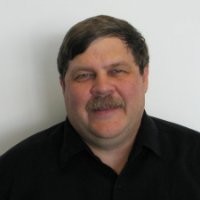
Douglas “Doug” Houseman is an electric utility veteran with four decades of engineering and consulting experience spanning transmission, distribution, grid modernization and utility operations. His work has taken him to more than 50 countries and more than 200 utilities. He has served as Utility Modernization Lead at Burns & McDonnell and as Vice President of Technical Innovation at EnerNex.
Over the past two decades, Doug has helped utilities address emerging technologies, changing regulations and evolving customer needs. His work includes grid modernization strategy, metering, distributed resources and the technologies utilities use to plan, operate and modernize their systems.
Doug is a Senior Member of IEEE and an active leader in the Power & Energy Society. He contributes to industry working groups and brings a practical, field-oriented perspective to utility engineering and operations.