
Fields & sources
Know what is around you.
Equipment and operating conditions determine the type of field present.
Distinguish common electric, magnetic, and radio-frequency sources in utility work.
Practical training in electromagnetic fields and radiofrequency energy, built around the equipment, locations, and questions utility crews encounter.
Request this courseView course contentFrom transmission lines and substations to SCADA radios, microwave links, and shared communications towers, EMF and RF are part of utility operations. This course helps personnel recognize common sources, understand exposure considerations, interpret warning signs, and identify when a task needs additional evaluation.
Utility field crews, relay and substation technicians, communications and SCADA personnel, supervisors, and employees who work around electrical or transmitting equipment.
Know what is around you.
Equipment and operating conditions determine the type of field present.
Understand the considerations.
The job location and task help define what exposure should be assessed.
Apply awareness to the job.
Assessment findings inform coordination with the responsible safety personnel.
The session begins with course objectives and field responsibilities, then connects the fundamentals to practical decisions. Utility scenarios and discussion reinforce each topic.
Review the key concepts and field responsibilities, connect them to your work, and discuss participant questions. An optional 10–15-question knowledge assessment reinforces the course.
8:00 a.m.–noon. This four-hour online session includes topic discussion, a 15-minute break, and an optional knowledge assessment. Timing and emphasis can be tailored to your team.
A copy of the presentation slides for participants to revisit.
An optional 10–15-question course-completion assessment to review key concepts and field responsibilities.
The course is a four-hour online, instructor-led session with utility examples, discussion, a break, and an optional knowledge assessment. The agenda runs from 8:00 a.m. to noon, with timing confirmed for your team.
Yes. The agenda can emphasize your equipment, job roles, field scenarios, and employee or customer questions. We will confirm the final scope and schedule in your proposal.
This is awareness training. It introduces exposure assessment and measurement limitations and helps employees recognize when specialist support is needed. Site-specific procedures, qualified assessments, and employer authorization remain essential.
Participants receive presentation slides and can complete an optional knowledge assessment to reinforce the course.
The fee is $5,000 for a four-hour live online session. See pricing for details.
An annual refresher is recommended. Ask about a shorter refresher suited to your organization's training program.
Your organization pays one course fee with unlimited attendees at no extra cost.
$5,000
One four-hour, instructor-led session, delivered live online.
Request a proposal to confirm the fee, agenda, and delivery arrangements for your training.
Request quote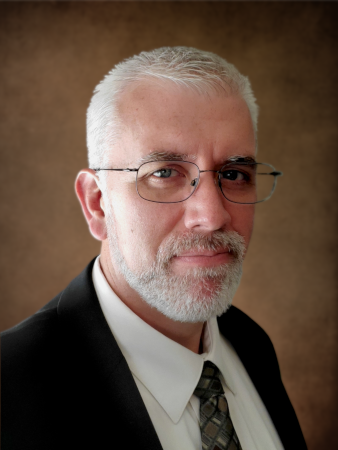
Owner & Principal Engineer
Power Electromagnetics Consulting
Dr. Jon Leman brings more than two decades of engineering practice to the classroom, connecting electromagnetic principles with the realities of utility work. His experience spans AC and DC power delivery, high-voltage transmission design, EMF analysis, induced voltages and currents, and electromagnetic interference.
As Owner and Principal Engineer of Power Electromagnetics Consulting, he helps utilities and project teams investigate complex electrical questions. His work has included advanced system studies, equipment failure investigations, expert testimony, and public outreach. Previously, he served as Chief Engineering and Technology Officer at Clearwater Power Company and as a principal engineer and manager at POWER Engineers.
He pairs that industry background with substantial teaching experience. At the U.S. Navy Nuclear Power Training Command, he taught officer and enlisted students and earned the Master Training Specialist qualification. He also taught upper-level electromagnetics at Washington State University. His research and publications address transmission-line electric fields, corona effects, and induced contact currents.
Dr. Leman holds a Ph.D. in Electrical Engineering from Washington State University and M.S. and B.S. degrees in Electrical Engineering from the University of Idaho. He is a licensed Professional Engineer in Idaho and a Senior Member of IEEE.
Tell us who will attend, the equipment and work settings you want to cover, and your preferred timing.
Email about this courseContact & training inquiries