
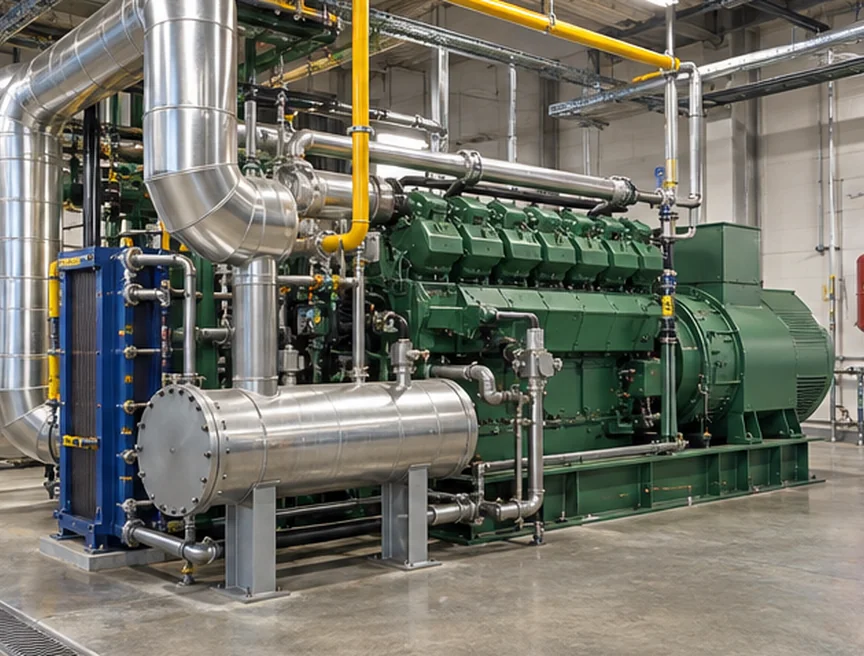
When an engine makes electricity, some of the energy in its fuel leaves as heat. A combined heat and power system puts some of that heat to work. A hospital, for example, might use an engine to turn a generator and recover heat from the engine to make hot water.
Where does the heat come from?
An engine’s exhaust is hot, and its cooling system carries away heat too. Heat exchangers can pass some of that energy to the water or steam system in the building. The engine still does its original job of turning the generator.
Why put it close to the building?
Heat can be harder to send a long way than electricity. It’s also only useful if somebody needs it when the plant is making it. A building or factory with a steady need for hot water or steam can be a good match.
For more on how plants turn fuel into useful energy, see Electric Power Generation.