
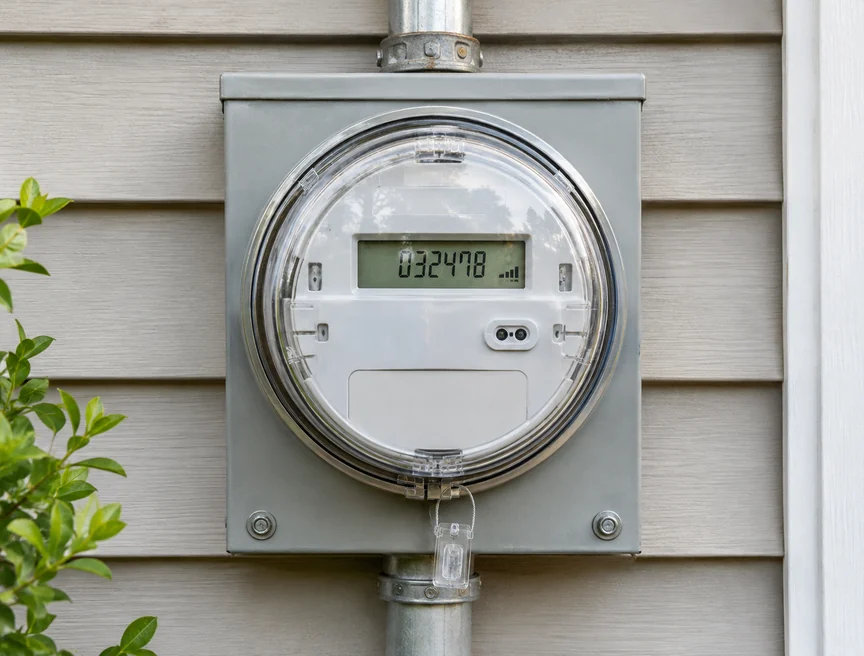
A typical electric smart meter measures how much electricity the house uses as a whole. It doesn’t send the utility a list that says the dryer ran at 4:00 and somebody made toast at 4:15. What it can do is record how much energy you used over short stretches of time.
A receipt with timestamps
Think of a grocery receipt that shows the total spent every 15 minutes and leaves out the items. You can see the spending jump, but if you bought bananas and bread at the same time, the total can’t tell you what each one cost. A meter reading works much the same way. Depending on the utility and meter, you may be able to see those totals by the hour or at shorter intervals.
You can still make an educated guess. If your usage jumps about the time your electric car starts charging, there’s a good clue. Software can sometimes estimate which kinds of equipment are running from patterns in detailed readings. Those are estimates from the overall pattern.
Why call it smart?
Part of the answer is that it can communicate with the utility. Along with collecting readings remotely, some utilities use meter signals to help find outages or check whether power is back. The meter can be useful even on a day nobody makes toast.
For more on how utilities measure electricity use and deliver power to customers, see Basics of Electric Utilities 101.