
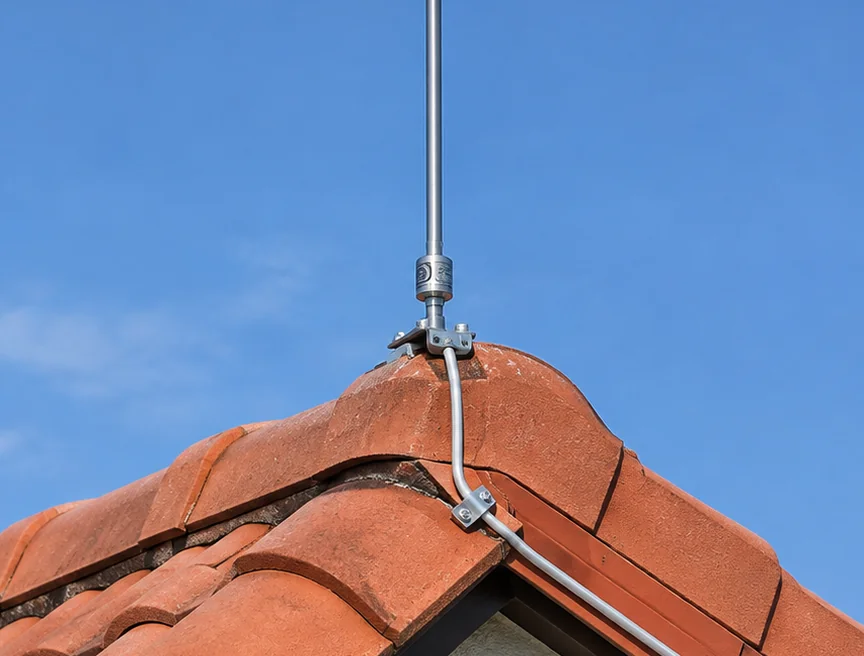
A lightning rod is intended to intercept a strike that could otherwise hit the building. A complete protection system connects the rod to conductors that run down the building and into the ground. That gives the current a path designed to keep it away from parts of the building it could damage.
Why put the rod up high?
It’s placed where a strike might attach and where the system can better protect nearby roof surfaces. A big or complicated roof can need several rods. One sticking up in a random spot doesn’t tell you which other parts of the building are protected.
What if the lightning comes in on a utility line?
A nearby strike can send a surge along wiring entering the building. Surge protection at those connections has a different job from the rod on the roof. A complete design considers both.
For more on voltage, current, and paths to ground, see Basics of Electric Utilities 101.