
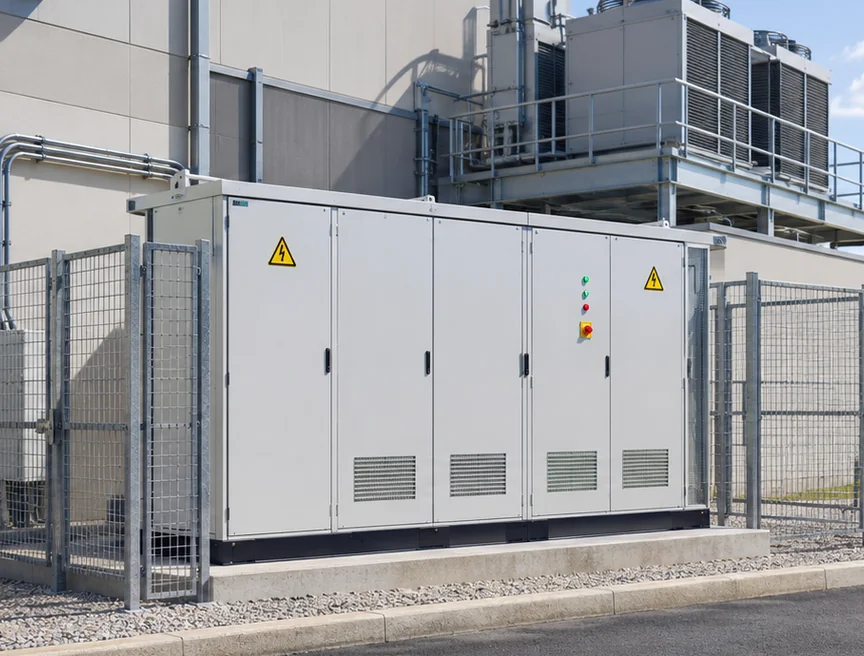
Some electric bills charge for a customer’s highest demand over a measured period. A battery can supply part of a building’s load when several large pieces of equipment run together. The equipment still gets the power it needs, but less of it comes through the utility meter at that moment.
What happens when the battery charges again?
It needs power to refill. A control can choose a time when the building is using less, so recharging doesn’t make a new high point. The battery returns less energy than it took to charge, but it can shift when the building draws that power from the grid.
Can it cover any high demand?
The battery has a maximum power and a limited amount of stored energy. A short spike and several hours of high use are different jobs. The rate and the building’s load pattern determine what the battery can do for the bill.
For more on how batteries can change when a site draws electricity, see Battery Storage & Grid Integration.