
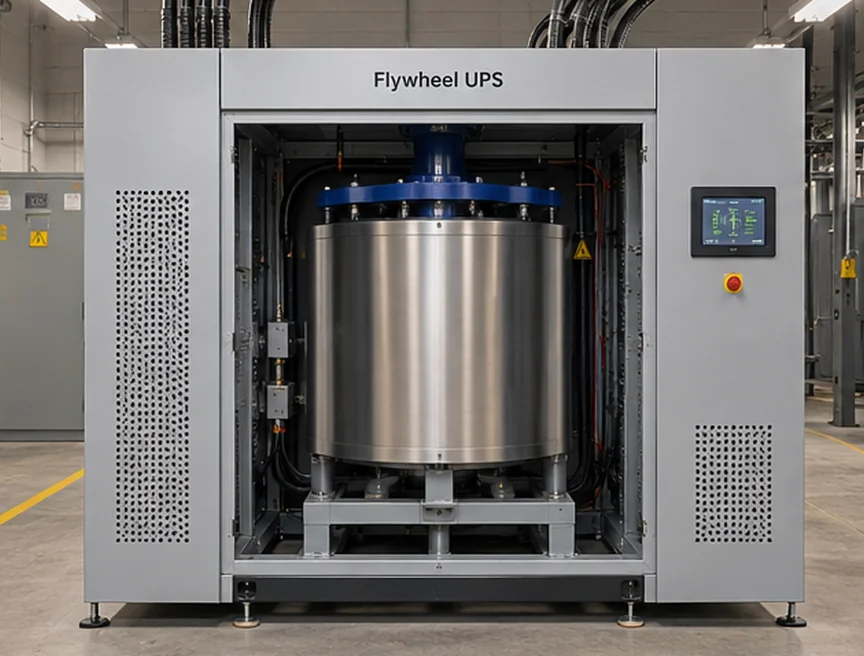
A flywheel stores energy by spinning a heavy rotor. When the power is available, a motor keeps that rotor turning. If the supply drops, the spinning rotor can turn a generator. The electricity it makes helps keep the connected equipment running while the rotor slows down.
How long can that last?
Many backup flywheels are designed for short events. They can cover a brief interruption or buy time for another source to start. The amount of energy stored and the size of the load determine how long the unit can carry it.
What does it do after the power comes back?
The motor brings the rotor back up to speed. Some systems use one machine as both the motor and the generator. Power flows one way while it’s spinning up and the other while it’s giving energy back.
For more on motors, generators, and stored energy, see Basics of Electric Utilities 101.