
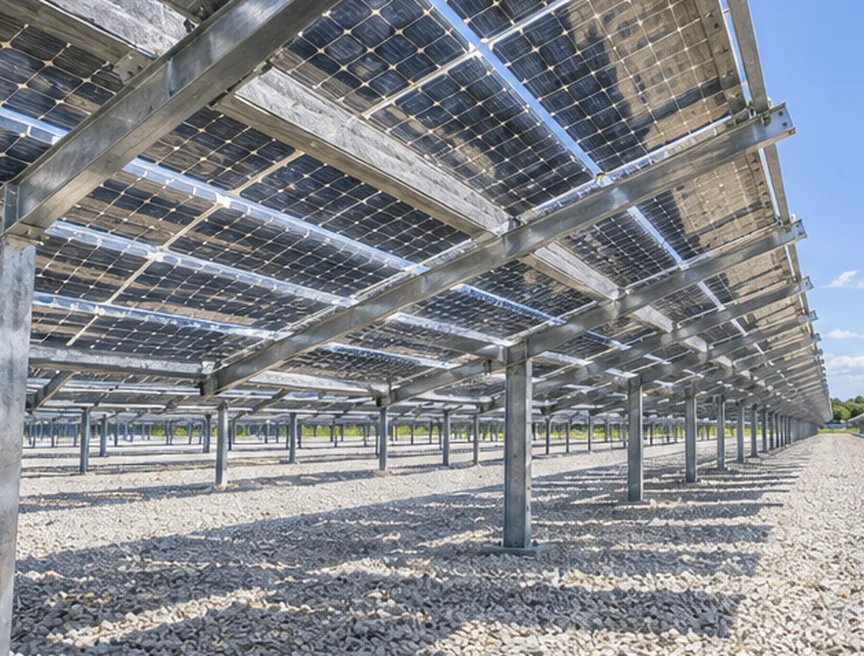
A bifacial panel uses cells that can make electricity from light entering the front or the back. The front gets direct sun and light scattered by the sky. The back can collect some light reflected off whatever is below and around it.
Does that mean it makes twice the power?
The back usually gets less light than the front. A light-colored surface can send more light up than a dark surface. The height of the panel, its tilt, and shadows from the mounting hardware can also affect how much reaches the back.
Why does that matter when a solar farm is laid out?
The farm can leave room behind and below the modules so reflected light has a path to them. How much extra energy it gets depends on the site and the way the array is built.
For more on how solar equipment turns light into electricity, see Basics of Electric Utilities 101.