
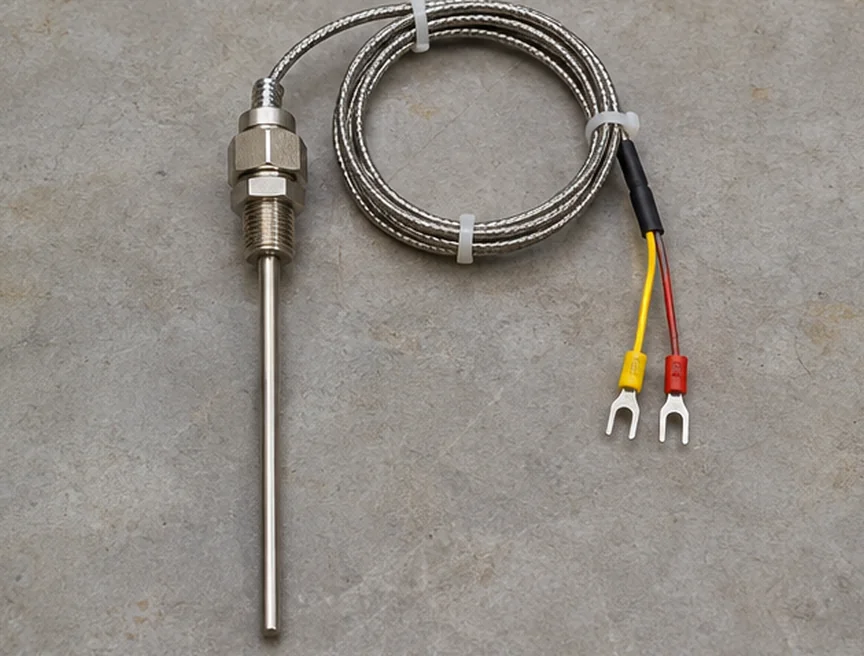
A thermocouple uses two different conductors joined at the point being measured. When that end is at a different temperature from the connections at the meter, the circuit develops a small voltage. The combination of metals determines how much voltage you get for the temperature difference.
Why does the temperature at the meter matter?
The instrument needs a reference. If the meter end warms up while the probe stays at the same temperature, the difference changes. A meter designed for thermocouples measures its connection temperature and uses that to work out the temperature at the probe.
Why use one in a hot place?
The sensing end can be made small and sturdy. Some types work at temperatures well above what many electronic sensors could stand. The choice depends on how hot the measurement point gets and what it’s exposed to.
For more on voltage and how it can carry information, see Basics of Electric Utilities 101.