
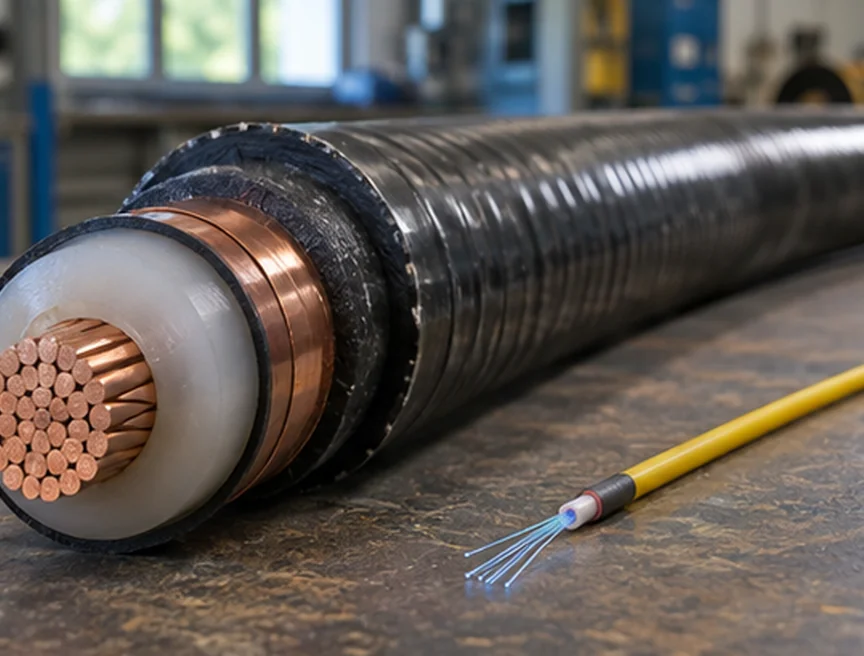
A buried cable makes heat as it carries current. A utility can sometimes run an optical fiber along the cable route to monitor the temperature. The measuring equipment sends light down the fiber and reads a small part of it that scatters back.
How does that tell them where it’s warm?
Light takes longer to return from farther along the fiber. The returning light also carries information that changes with temperature. The instrument combines those clues to make a picture of how temperature varies along the route.
Why measure more than one spot?
The cable can pass through different soils, ducts, or places where other cables are close. Some parts can get rid of heat better than others. A temperature profile can help a utility find the stretch that limits how much current the route can carry.
For more on how underground power lines carry current, see Basics of Electric Utilities 101.