
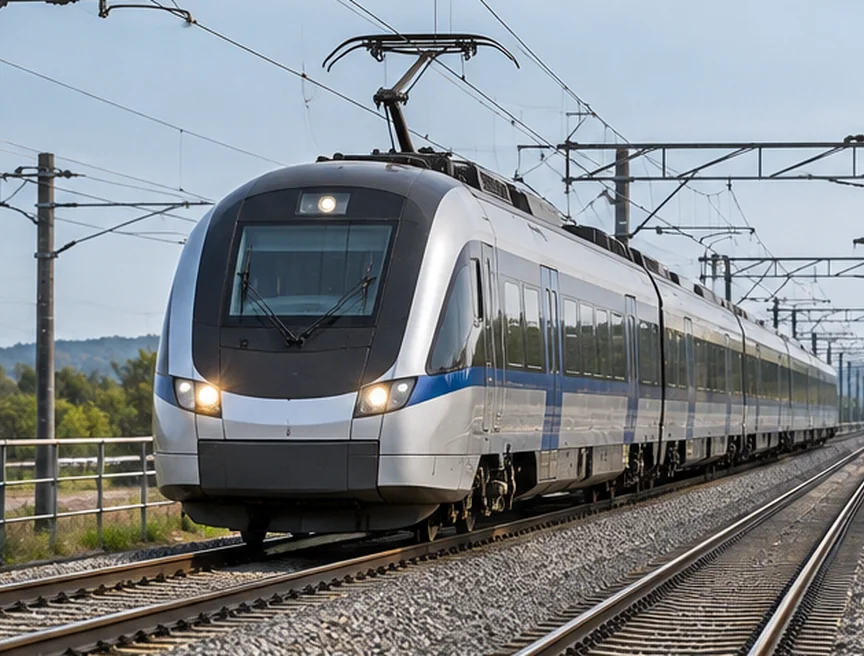
An electric train can pick up power from a wire overhead through a spring-loaded frame on its roof, called a pantograph. Current goes through the equipment on the train. On many railroads it then goes back through the wheels and the running rails toward the source.
Don’t all circuits need a trip back?
Yes. The rails make up some or all of that return path, depending on the railroad. There can also be separate return conductors along the route. You only see the train reaching up for one conductor because the rest of the circuit is closer to the ground.
Why are there sometimes several wires above the train?
A higher wire may support the contact wire through short hangers. Other wires may help feed power along the route. The pantograph slides along the smooth contact wire below them as the train moves.
For more on how electrical current completes a circuit, see Basics of Electric Utilities 101.