
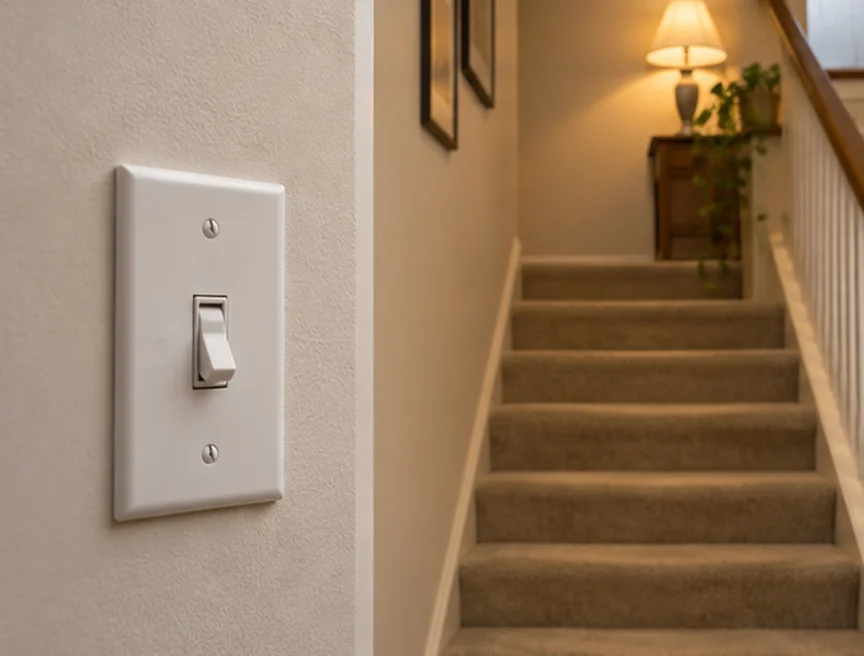
The switches give the electricity two possible paths between them. Each switch selects one path. When both select the same one, there’s a complete route and the light comes on. Flip either switch and the selections no longer match, so the light goes out.
Think of a pair of railroad switches
Picture two tracks connecting the top and bottom of the stairs. The switch at each end decides which track it’s lined up with. To travel all the way through you need both ends lined up with the same track. Change either end and you’ve changed whether that route is open.
Why isn’t up always on?
At one end of the stairs, you can flip the switch up to turn on the light. Someone upstairs can then turn it off and leave your switch pointing up. The light depends on both switches together. That’s why the handles on these switches often skip the little ON and OFF labels.
For more on how electricity moves through a circuit, see Basics of Electric Utilities 101.