
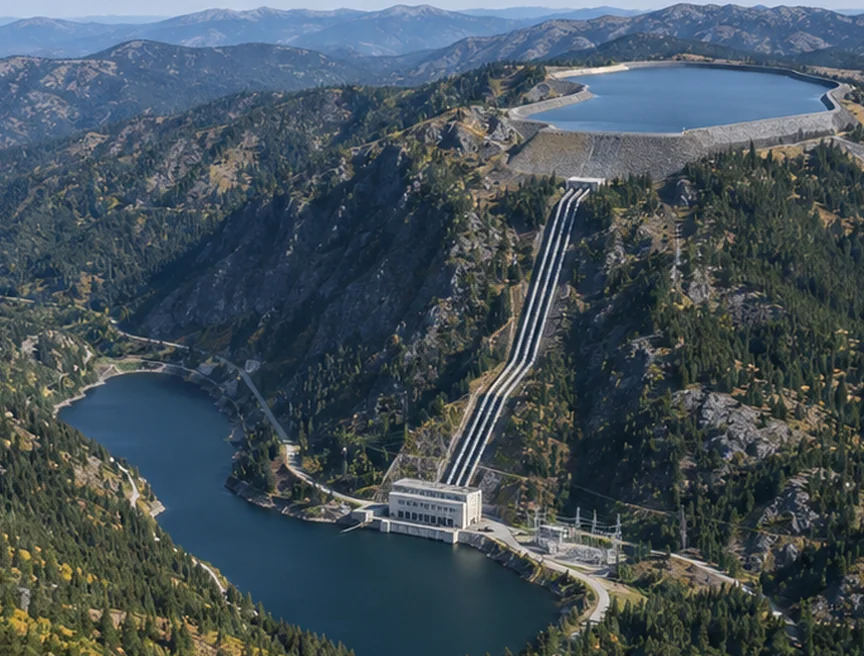
Move water uphill when electricity is available, then let it flow back down through a turbine when you need power. That’s pumped-storage hydropower. The upper reservoir is where the energy waits.
Think of lifting a bucket
The work you do lifting a bucket of water gives it energy because of where it is. Set it back down and that energy can do work on the way. At a pumped-storage plant, pumps move water from a lower reservoir to an upper one. When the plant generates electricity, falling water turns a turbine before returning to the lower reservoir.
Can you get all the energy back?
Some energy is lost in the pumps, pipes, turbine, and other equipment. You get less electricity back than you put in. The point is that you can use it at a different time. A plant can pump when power is plentiful, then generate when the grid needs more. It’s a very large way to save something for later.
For more on hydroelectric generation and energy storage, see Basics of Electric Utilities 101.