
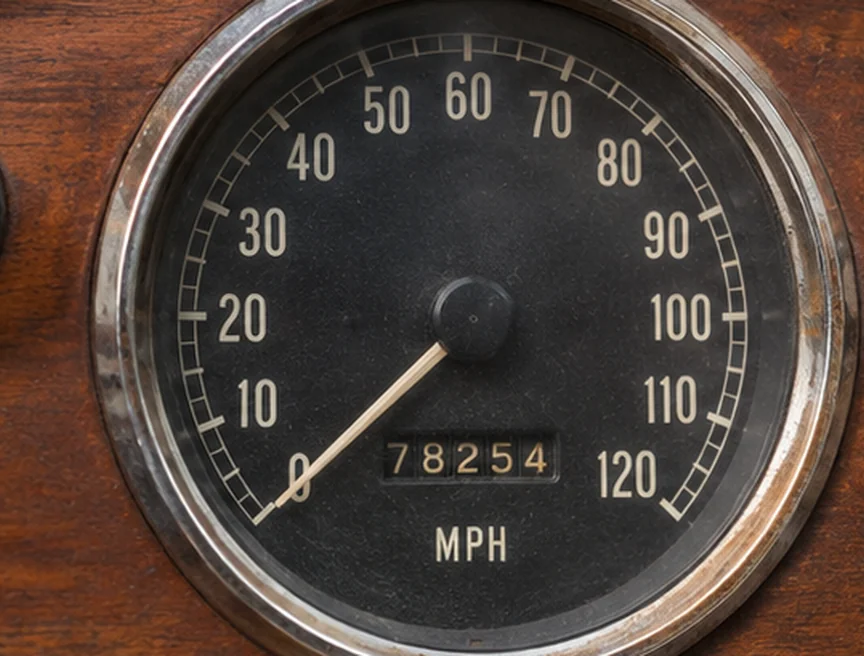
A flexible cable used to run from the drivetrain to the back of many speedometers. As the car went faster, the cable turned faster. It spun a magnet inside the gauge beside a little metal cup attached to the needle.
Was the magnet pushing directly on the needle?
The spinning magnetic field set up loops of current in the metal cup. Those currents produced forces that tried to pull the cup around with the magnet. A spring pulled back. At a steady speed, the two effects balanced and the needle settled at a spot on the dial.
Why didn’t the cup spin all the way around?
The spring got harder to twist the farther the needle moved. Slow down and the magnetic pull got weaker, so the spring moved the needle back toward zero.
For more on changing magnetic fields and the currents they can make, see Basics of Electric Utilities 101.