
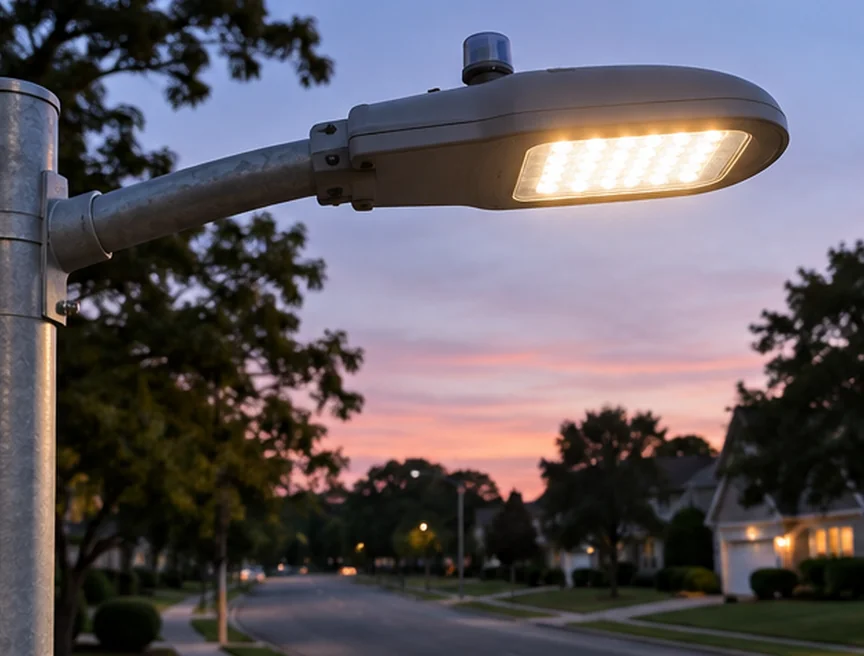
Look on top of a streetlight and you may see a little cap. It can hold a photocontrol, which measures light and switches the fixture on when it gets dark enough. When daylight returns, the control turns the fixture off.
Why doesn’t a passing headlight turn it off?
Many controls wait for the change in light to last for a little while. That way a headlight or a brief shadow doesn’t keep switching the lamp. Many also use different light levels for turning on and off, so they don’t chatter back and forth right at dusk.
Do all streetlights have their own sensor?
A group of lights can share a control. Some lights use schedules or are managed remotely, so a control center can change when they come on or how bright they run. The little cap is only one way to do it.
For more on how utilities supply equipment along a street, see Basics of Electric Utilities 101.