
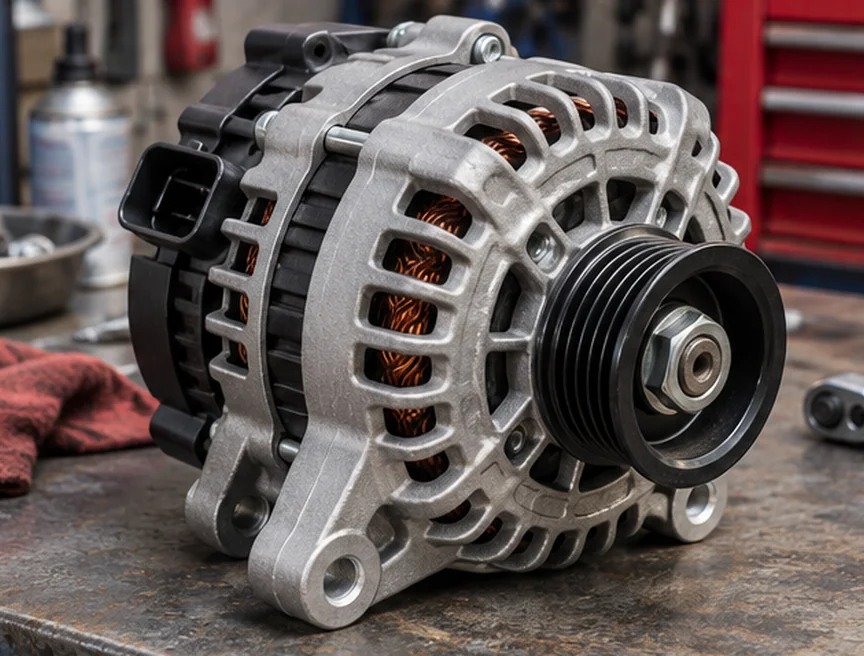
A car engine turns the alternator through a belt. A magnetic field spins inside the alternator and produces alternating voltage in its windings. The battery needs current in one direction to charge, so diodes in the alternator turn that AC into DC before it reaches the car’s electrical system.
What keeps the voltage from climbing when the engine speeds up?
A regulator can change the current that makes the rotating magnetic field. A stronger field helps the alternator produce more voltage at a given speed. As speed or electrical demand changes, the regulator adjusts the field to help keep the car’s voltage in range.
Does the battery do anything after the engine starts?
It can help supply the system if the alternator isn’t producing enough at that moment. It also helps smooth changes in voltage. The alternator normally takes over much of the electrical load while the engine runs.
For more on generators and the difference between AC and DC, see Basics of Electric Utilities 101.