
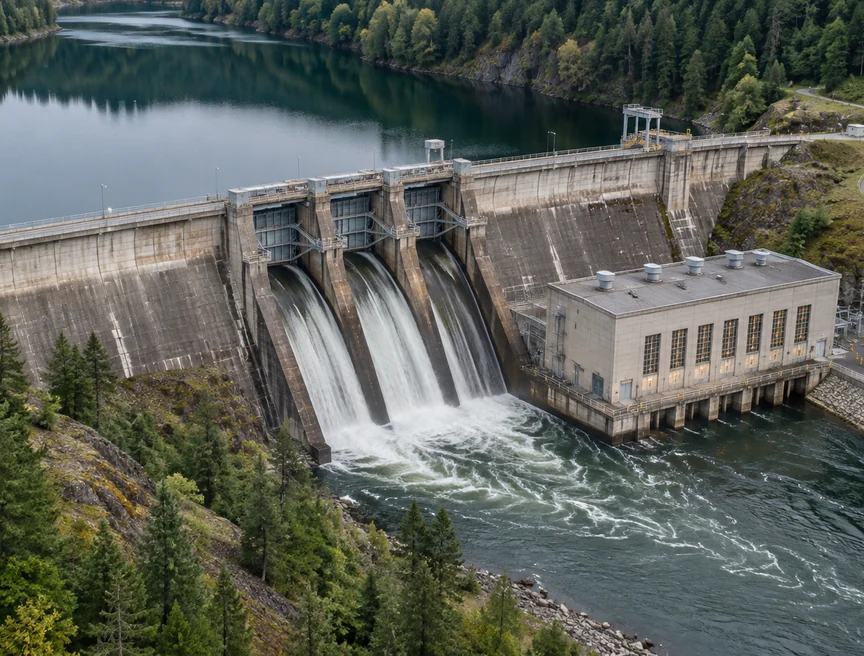
The dam holds water up high. When some of that water flows down through the plant, it spins a turbine. The turbine turns a generator, and the generator makes electricity. Think of a waterwheel with a much bigger job to do.
How far does the water fall?
Water usually travels through a large passage to the turbine and exits on the downstream side. The difference in water level gives the plant what engineers call head. A bigger drop gives each gallon more energy to give up. More water flowing through each second can also produce more power, up to what the equipment can handle.
Is the water used up?
The water comes out below the dam and continues down the river. What it gave up was some of the energy it had from being higher up. It’s like a sled at the bottom of a hill. The sled is still there, but it doesn’t get another ride until it gets back up the hill.
There’s only so much water the plant can send through at a given time. River flow, reservoir levels, and downstream water needs all affect when and how much a plant can generate. A spillway gives excess water a separate route past the dam.
For more on how hydro and other power plants turn energy into electricity, see Basics of Electric Utilities 101.