
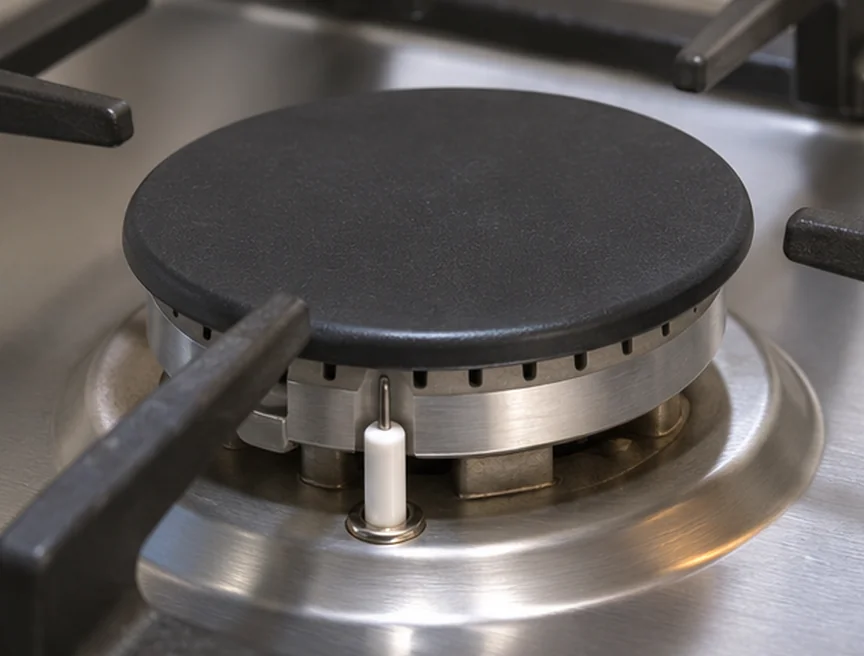
When a modern gas cooktop clicks, an ignition circuit is usually making brief high-voltage pulses. The voltage makes a spark jump from a small electrode to metal near the burner. When the gas and air mixture reaches the spark, it can light.
Why is the electrode surrounded by ceramic?
The spark is meant to jump at the exposed tip. The ceramic supports the electrode and insulates the rest of it from the metal around it. Dirt or moisture in that area can give the electricity another path and interfere with ignition.
Why do several burners sometimes click when I turn on one?
Some stoves send pulses to multiple electrodes from one ignition module. The others can spark even though only one burner has its gas valve open. The exact way it works depends on the cooktop.
For more on voltage and what makes electricity jump a gap, see Basics of Electric Utilities 101.