
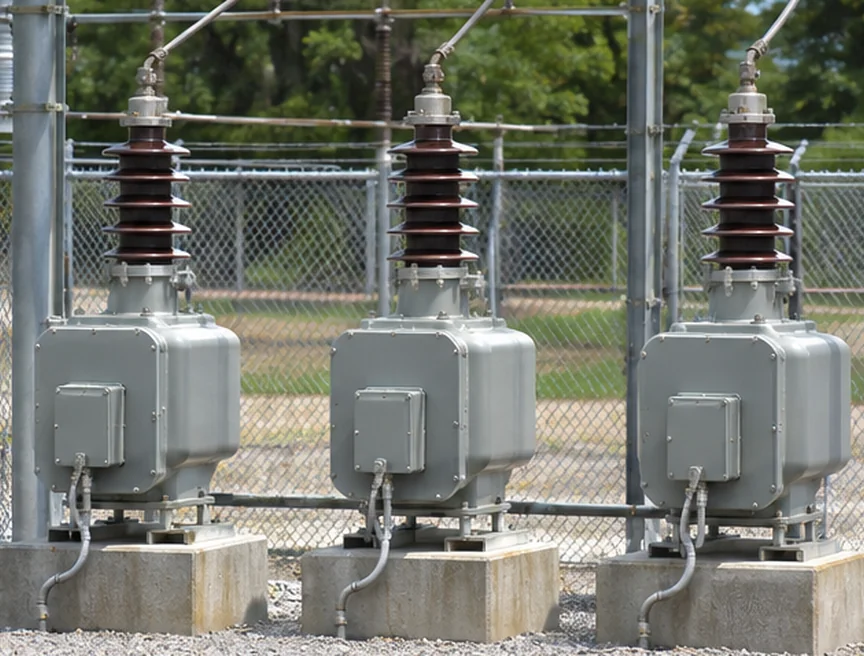
A meter at a utility station can use a voltage transformer between itself and the high-voltage line. The transformer supplies a much lower voltage for the meter to read. The reading follows what happens on the line, using a known ratio.
How does the meter know the original voltage?
If the transformer has a ratio of one hundred to one, a reading of 120 volts on its output represents about 12,000 volts on its input. The meter or the system reading it can apply that ratio. The transformer is chosen to make the smaller copy accurate enough for the job.
Is there a version for current?
Yes. A current transformer supplies a smaller current related to what’s going through the line. A utility often uses both types together when it needs to measure power or energy on a high-voltage circuit.
For more on voltage and transformer ratios, see Basics of Electric Utilities 101.