
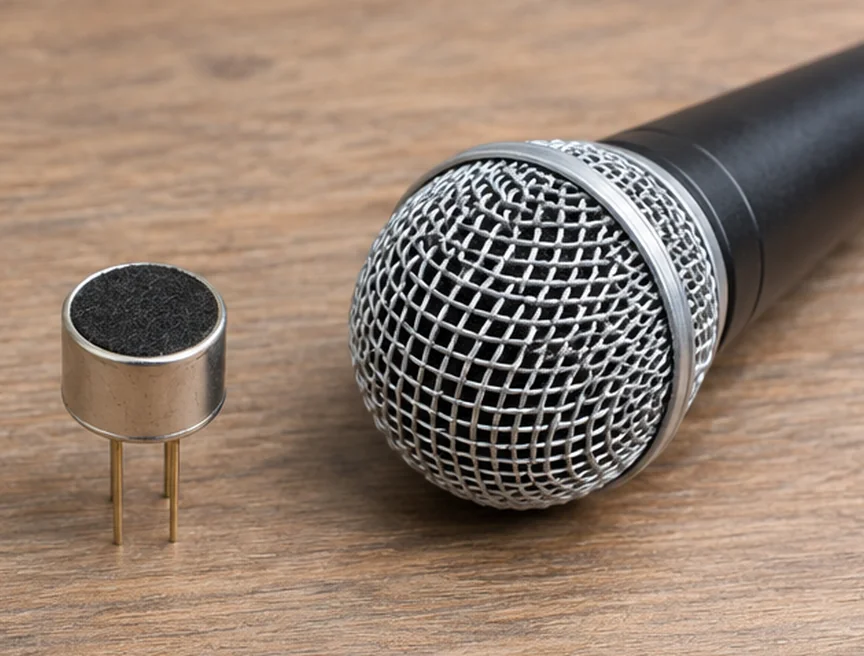
A microphone has a thin piece called a diaphragm that moves when sound reaches it. In a common dynamic microphone, a small coil moves with the diaphragm in a magnetic field. That movement produces a small voltage that follows the changing air pressure.
Why do some microphones need power?
Different designs turn the motion into a signal in different ways. A condenser microphone uses the diaphragm as part of a capacitor. Its movement changes the capacitance. That design needs a source of charge, and some of its electronics need a power supply.
Why doesn’t the microphone make a big signal by itself?
There isn’t much energy in the air hitting the diaphragm. The microphone makes a small signal that an amplifier can bring up to a level other equipment can use.
For more on changing magnetic fields and electrical signals, see Basics of Electric Utilities 101.