
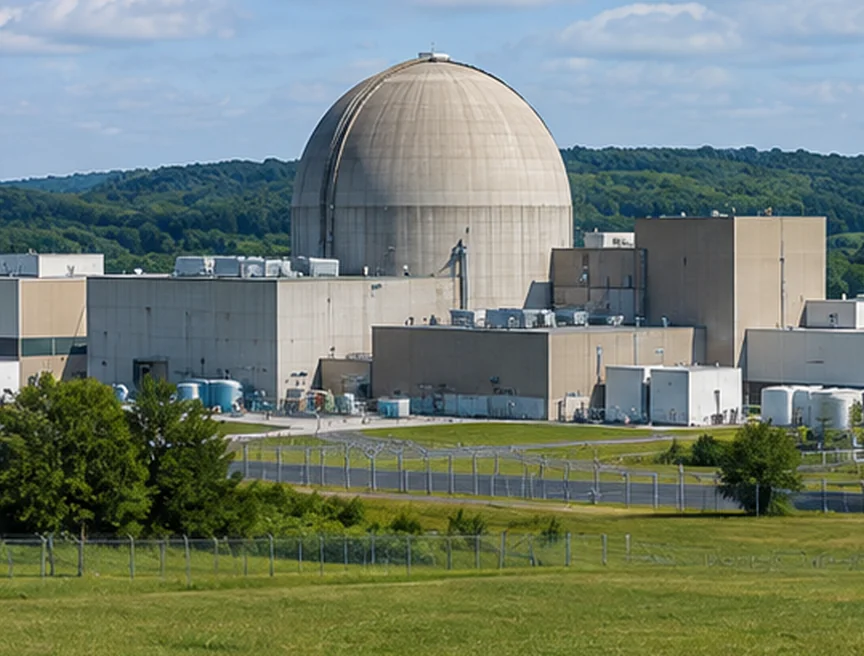
A nuclear power plant uses fuel, but it gets heat from splitting atoms rather than from a flame. In the reactor, some uranium atoms split and release energy. Most of that energy ends up as heat. Water or another coolant carries the heat away from the fuel.
How does that heat become electricity?
In a common pressurized water reactor, hot water from the reactor stays under pressure. It transfers heat to water in a separate system, which boils and makes steam. The steam turns a turbine connected to a generator. Other designs make steam directly in the reactor.
What happens to the steam afterward?
After the turbine, the steam is cooled until it becomes water again. Then it can go back around the system. From the turbine onward, a lot of the equipment has the same job as it does in other steam power plants.
For more on how power plants turn heat into electricity, see Electric Power Generation.