
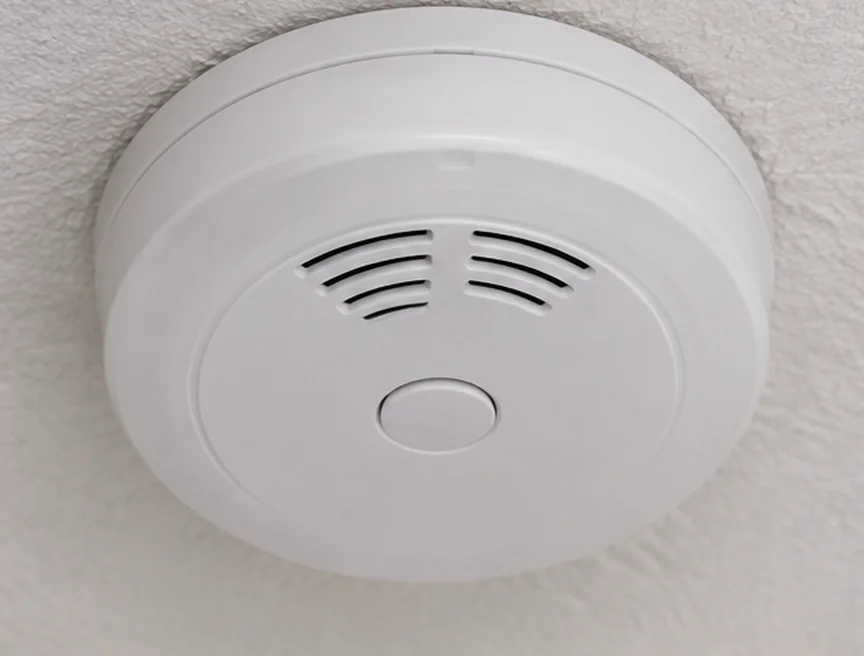
In a photoelectric smoke alarm, a tiny light points into a chamber. The light sensor is set off to the side. With clean air in the chamber, very little of the light reaches it. Smoke particles scatter some of the light toward the sensor. If enough gets there, the alarm sounds.
Why does the box have slots around it?
Air needs to reach the chamber. The shape of the chamber helps keep room light out while letting air in. That way the lamp inside can do the measuring.
Is that how every smoke alarm works?
Another kind measures a tiny electric current through air in a chamber. Smoke changes that current. A combination alarm may use more than one kind of sensing. The test button checks features of the alarm without needing to make smoke.
For more on how electrical devices use light and sensors, see Basics of Electric Utilities 101.