
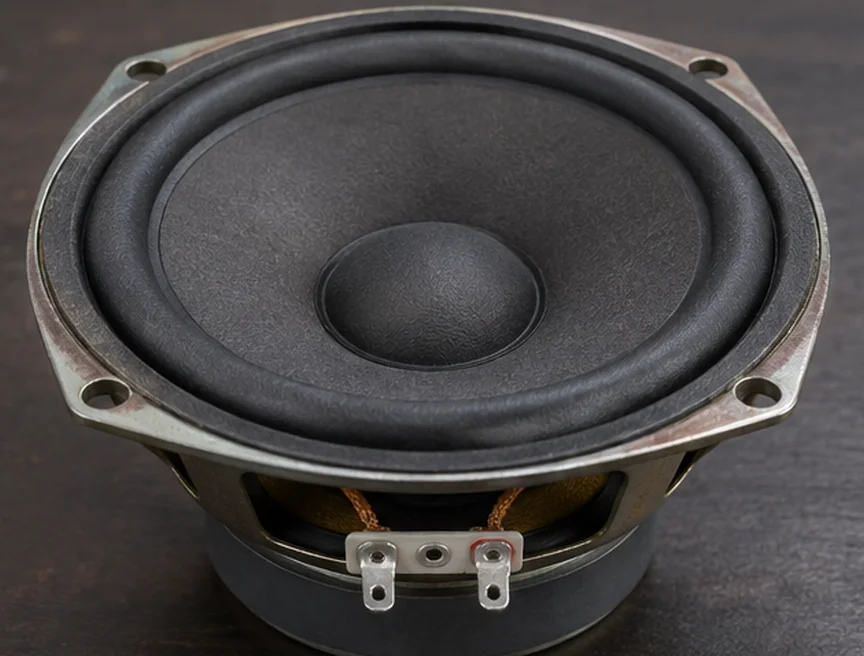
Behind the cone of a common loudspeaker is a small coil sitting in a magnetic field. The amplifier sends a changing current through the coil. The field pushes on the coil, and the coil pushes or pulls the cone it’s attached to.
Where does the sound come from?
As the cone moves out, it pushes the air in front of it. As it moves back, the air pressure drops a little. Those changing pressures travel through the room as sound. Move the cone faster and it can make a higher note.
Why use a big speaker for bass?
A low note can take a lot of air movement to get the sound you want. A larger cone can move more air for the same amount of travel. A small driver can be better at moving quickly for the higher notes, which is why some speakers have several different-sized drivers.
For more on how electric current and magnets work together, see Basics of Electric Utilities 101.