
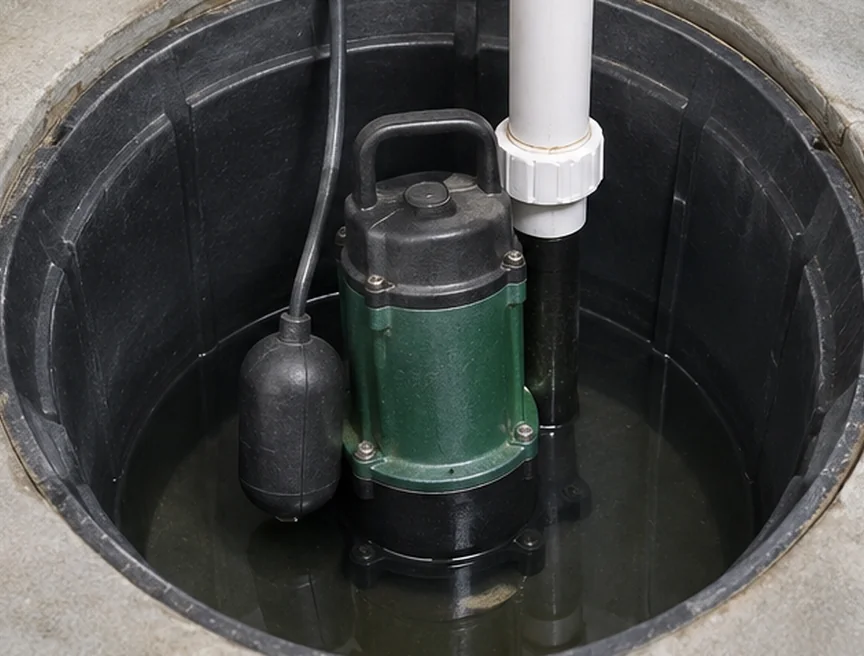
A common sump pump has a float that rises with the water in the pit. When the float reaches a set height, it operates a switch or sends a signal to a control. That starts the motor. As the pump takes water out, the float comes down and the pump shuts off.
Why doesn’t it switch at exactly the same height both ways?
The water level can bounce a little while the pump is running. Giving the pump a higher turn-on point and a lower turn-off point lets it run for a useful stretch instead of clicking on and off around one level.
What if there’s no float to see?
Some models sense water in a different way or hide part of the switch inside the housing. The job is the same. The motor starts when enough water has collected and stops after the level has dropped.
For more on how switches control motors and other loads, see Basics of Electric Utilities 101.