
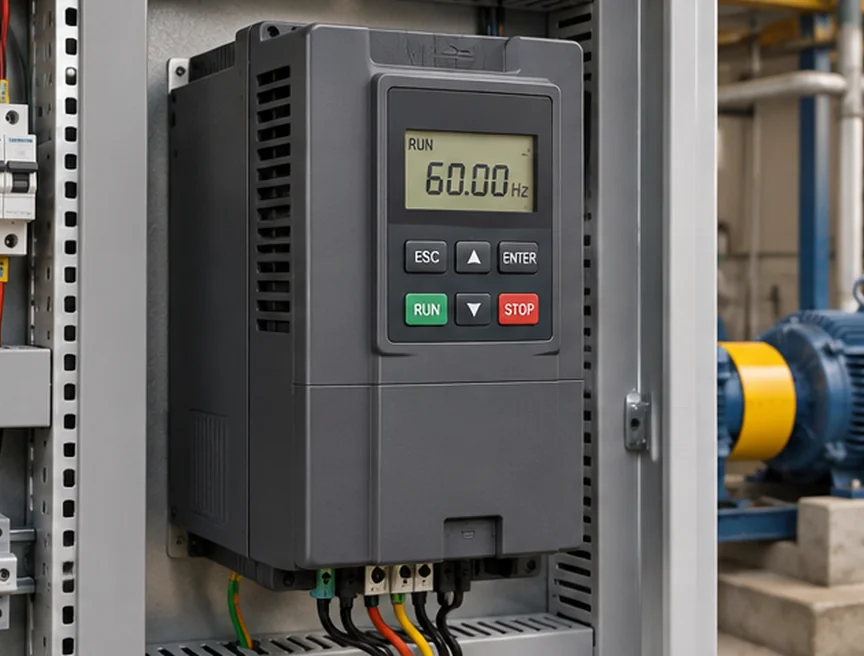
The magnetic field in a common AC motor rotates at a speed tied to the frequency of its supply. A variable frequency drive makes an AC output the motor can run on at a different frequency. Lower the frequency and the field turns slower. The motor can follow it down.
Where does the different frequency come from?
Many drives first convert the incoming power to DC. Electronic switches then use it to make an output whose effective AC frequency and voltage can be changed. The motor responds to that output instead of being tied directly to the wall supply.
Where would you want a slower motor?
A pump or fan doesn’t always need to run flat out. Slowing down can be more efficient than running at full speed and restricting the flow afterward.
For more on AC frequency and how motors use it, see Basics of Electric Utilities 101.