
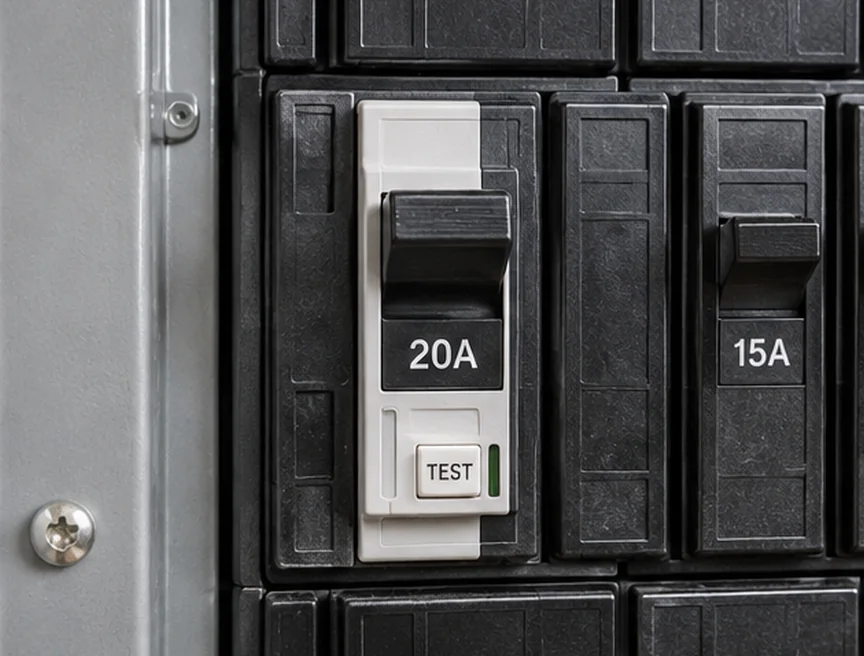
A damaged wire or a bad connection can make electricity jump a small gap. That’s an arc. The current may be below what would trip a standard breaker for overload. An arc-fault circuit interrupter looks for changes in the shape and behavior of the current that can point to an arc.
What about the sparks inside some motors?
Brushes and switches can make small sparks in normal operation. The breaker’s electronics look for patterns that match certain kinds of unwanted arcing, rather than tripping on every abrupt change in current. Different designs make that distinction in different ways.
Is this the same job as a ground-fault device?
A ground-fault device looks for current that left by a path it shouldn’t have. An arc-fault device looks for the electrical signs of arcing. Some breakers combine both functions.
For more on current and what circuit protection does, see Basics of Electric Utilities 101.