
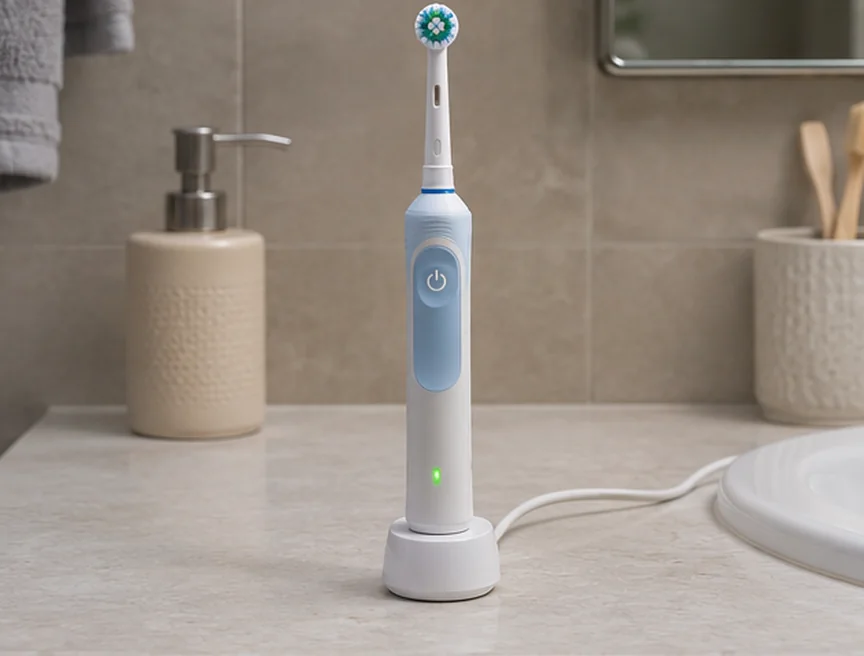
An electric toothbrush has a battery and a device that moves the brush head. In many round-head designs a small spinning motor drives a linkage. The linkage changes continuous rotation into a short twist one way and then the other. The motor goes around while the head moves through only part of a turn.
What about a brush that just feels like it vibrates?
Some use an electromagnetic drive that moves part of the head back and forth rapidly. There’s usually a spring or flexible part that helps guide the motion. The shape and speed of the movement depend on the design.
Why does a brush sometimes change its buzz under pressure?
Some models can tell when you’re pushing harder than intended. They may change the motion or turn on an indicator. Whether it has that feature depends on the brush.
For more on how small motors turn electricity into motion, see Basics of Electric Utilities 101.