
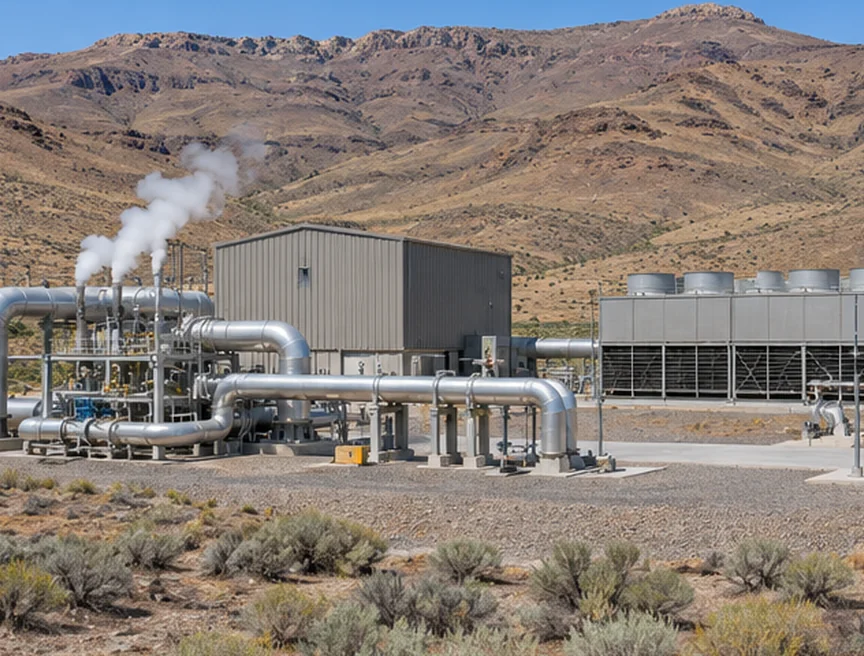
In some places, rock deep underground is hot enough to heat water to temperatures useful for making electricity. Wells bring hot water or steam up to a geothermal power plant. The heat from the ground takes the place of a fuel burned in a boiler.
Does the steam always come out of the well?
Some wells produce steam that can go to a turbine. In other plants, hot water comes up under pressure. Lower that pressure at the surface and some of the water flashes into steam. A third kind of plant uses the hot water to boil a separate fluid that turns to vapor at a lower temperature. That vapor turns the turbine.
Where does the water go afterward?
Plants often put cooled water back underground through other wells. That can help maintain pressure in the reservoir. The water can pick up heat again as it moves through the rock.
For more on how different power plants turn turbines, see Basics of Electric Utilities 101.