
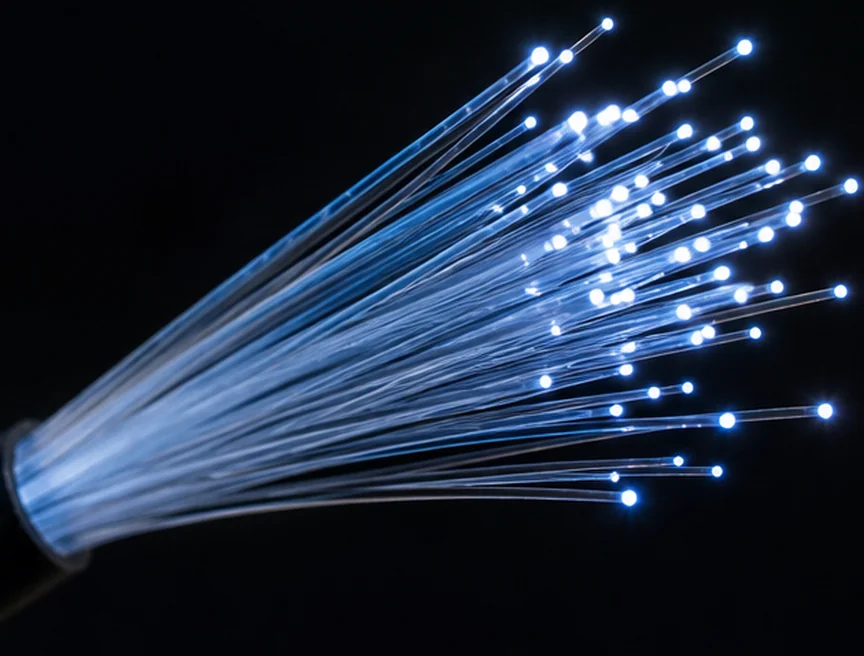
A fiber has a clear central core and a layer around it called cladding. The core has a higher refractive index, so light travels a little slower there than in the cladding. The change at the boundary can keep light headed along the core, even when the fiber curves gently. One way to picture it is light reflecting back into the core again and again.
Does the cladding need to be shiny like a mirror?
No. When light meets the boundary at a shallow enough angle, it can reflect back even though both materials are clear. That’s called total internal reflection. The materials and the size of the core determine how the fiber guides light.
What if the fiber bends sharply?
Some light can escape the core when the bend is tight. The signal at the far end gets weaker. That’s one reason fiber cables have a minimum bend radius.
For more on signals and the equipment utilities use, see Basics of Electric Utilities 101.