
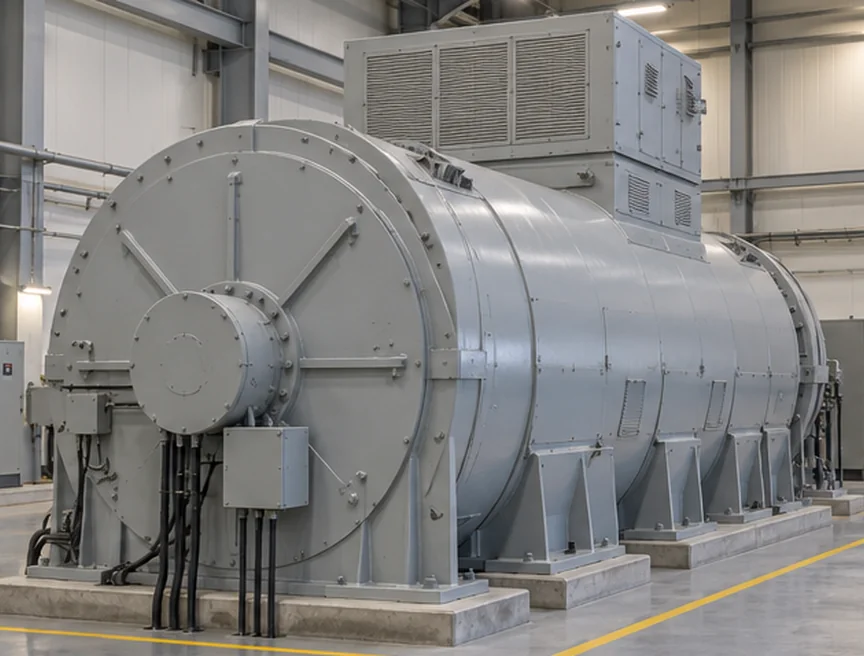
A synchronous condenser looks like a large motor or generator. Once it’s turning with the AC grid, it can change its magnetic field to supply or absorb reactive power. That can help operators keep voltage in range near the machine.
Does it make electricity customers can use?
It doesn’t have a turbine or engine pushing it to make a steady supply of real power. In normal operation it takes a little real power from the grid to cover losses like friction and heating. Its main job is supporting the electrical conditions around it.
Does the spinning part still help in other ways?
The turning rotor stores energy, which can briefly help when the grid’s frequency changes. The machine can also contribute current during a fault. Those are other reasons a utility may choose a rotating machine for certain locations.
For more on how the grid keeps voltage and frequency stable, see Grid Reliability & System Operations.