
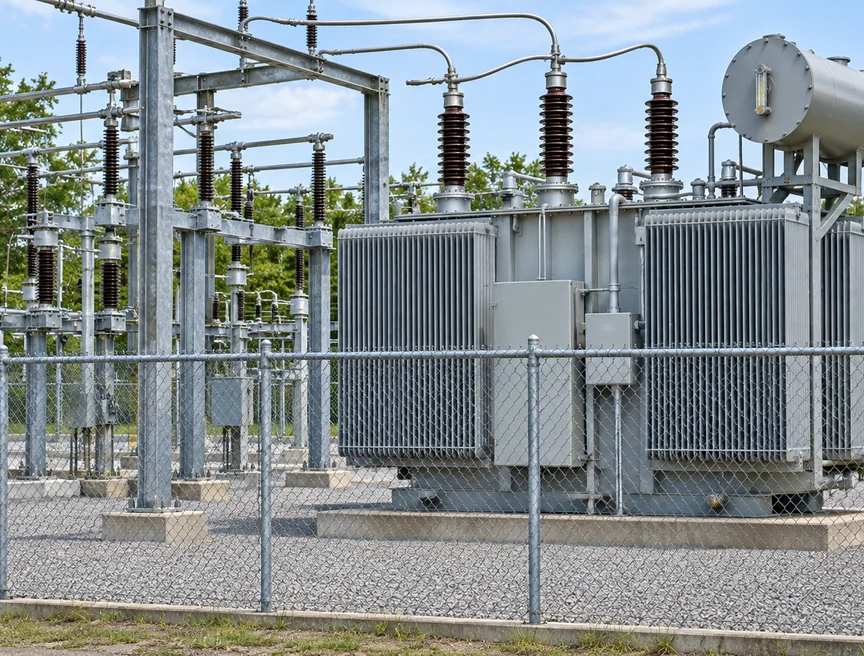
A substation is where utilities change voltage, connect lines, or switch parts of the grid on and off. Think of a highway interchange. Power comes in on one route and can leave on several others. At a distribution substation the voltage usually gets stepped down before the trip through the neighborhood.
What’s all that stuff behind the fence?
The big tank with cooling fins is often a transformer. Its job is to change the voltage. The metal bars and pipes overhead can be busbars. They give several circuits a common place to connect. Circuit breakers can open a connection, and protective relays tell them when to open if something goes wrong.
Why do we need the switches?
Say there’s trouble on one line leaving the station. A breaker can disconnect that line while the other lines keep running. Operators may also switch connections to take equipment out for maintenance or restore service through another route, where the system allows it.
Next time you pass a substation, see if you can spot the lines coming in and going out. Once you picture the station as an interchange, that jumble of equipment begins to make sense.
For a closer look at transformers, breakers, and how crews operate the equipment, see Substation Systems & Equipment.