
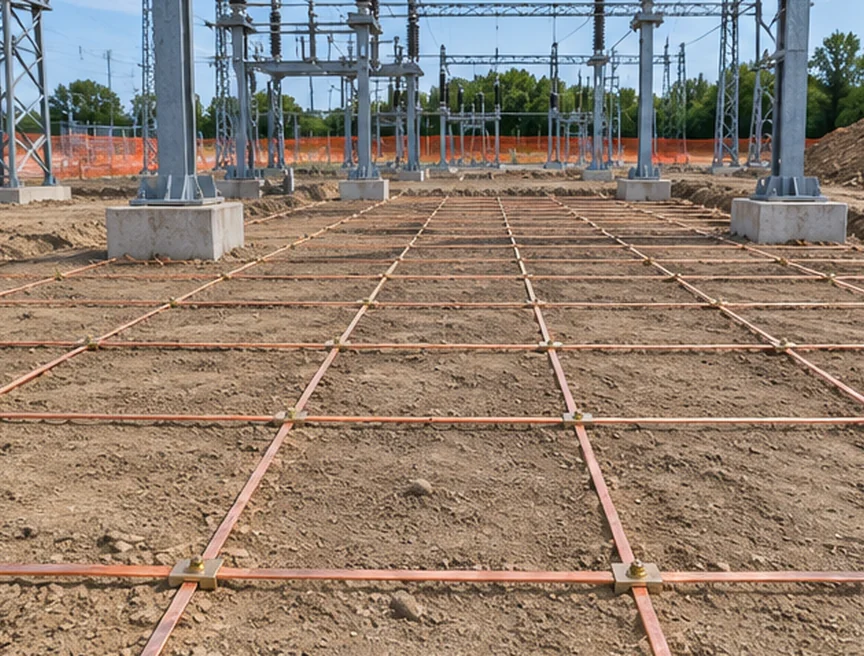
A substation can have a network of metal conductors buried below it. The grid connects to equipment and other parts of the station as shown in its grounding design. During a fault, it can help spread current and reduce the voltage difference between places where someone might stand or touch equipment.
Doesn’t grounding make the whole station stay at zero volts?
A large current can raise the voltage of the grid and the soil near it relative to a point farther away. The design tries to keep dangerous local differences within limits. That’s one reason the edges of the station and connections leaving it need attention too.
What does the stone above it do?
A suitable surface layer can add resistance between a person and the soil. The buried conductors and the stone do different jobs. Utilities use the soil and the electrical conditions at the site to decide how the pieces fit together.
For more on how substations connect and ground their equipment, see Substation Systems.