
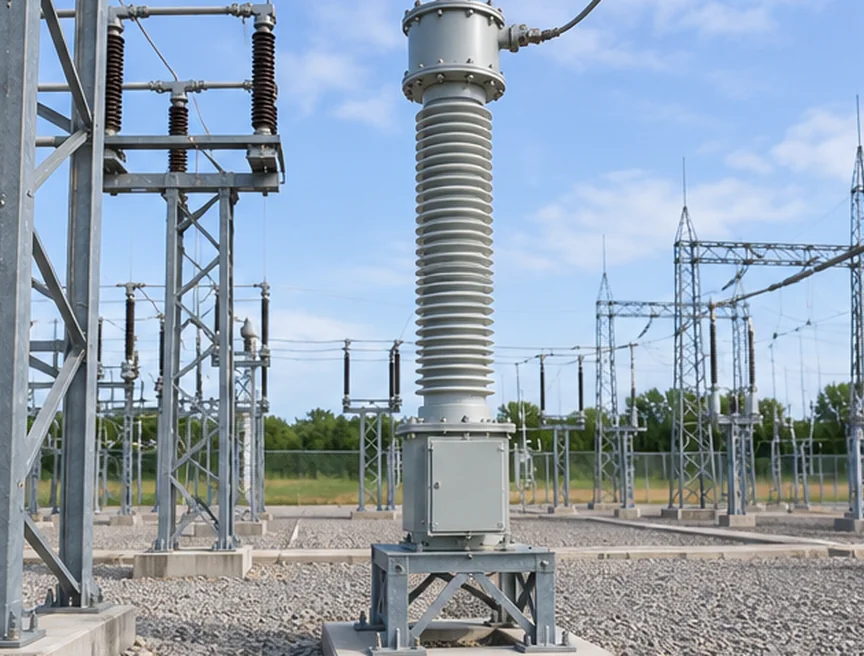
Meters and protective relays need a much smaller voltage than a transmission line carries. A capacitor voltage transformer uses capacitors stacked electrically in series. A tap in that stack takes a fraction of the line voltage. A smaller transformer and other parts then provide an output the instruments can use.
Why use capacitors on the high-voltage side?
The stack can divide a high AC voltage before it gets to the transformer portion. That can be practical at transmission voltages where building a conventional measuring transformer for the full line voltage would take a larger insulation system.
Does it supply power to the neighborhood?
It supplies a small signal to instruments. The ratio gives those instruments a way to work out the voltage on the line. The big power transformer at a station does the different job of moving useful power between voltage levels.
For more on the instruments that measure voltage in substations, see Substation Systems.