
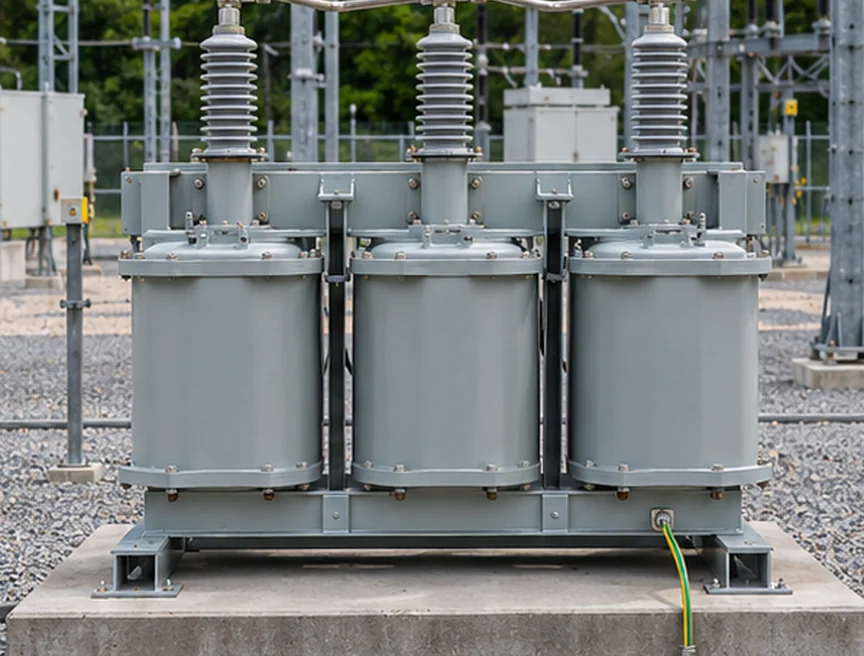
Some three-phase systems have no neutral terminal. A grounding transformer can create one so the circuit can be grounded in a controlled way. In a zigzag design, winding sections from different phases join in a pattern that brings out the neutral point.
Is it supposed to carry the ordinary load?
A grounding transformer’s main job in this use is to provide a path for current associated with a ground fault. With a balanced three-phase system and no ground fault, it normally draws relatively little current. When a phase contacts ground, the neutral path helps the utility control or detect what happens.
Why does the winding pattern matter?
The way the coils share the magnetic cores makes the transformer respond differently to balanced conditions and to currents associated with ground faults. The designer can choose the winding and neutral grounding arrangement for the needs of that circuit.
For more on transformer winding connections and what they do, see Power Transformer Fundamentals.