
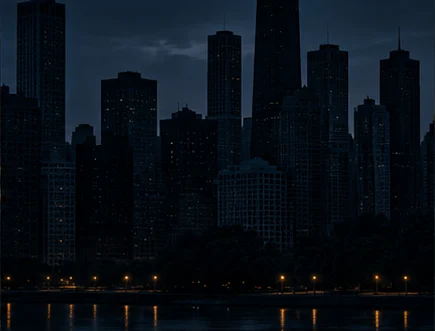
August 14, 2003. About 50 million people in Ontario and eight U.S. states lost power. Incidents like this remind us all of the social responsibility that we have to play our role in reliably delivering this essential energy source.
Here is how it happened
- Tree trimming was not done sufficiently in stretches of various transmission line easements.
- FirstEnergy’s control-room alarms failed, and operators lost awareness of problems on the grid.
- Beginning at 3:05 p.m. EDT, several major FirstEnergy transmission lines sagged into trees and tripped.
- As current found other paths to their loads more major transmission lines began to overload and fail.
- Power plants began to disconnect to protect themselves from a collapsing grid.
- Just after 4:00 p.m. EDT the cascade spread across the region. Restoration took hours in some areas and days in others.
Technical and human errors turned what could have been a manageable local outage into a widespread blackout. The electric industry formed NERC’s predecessor, the National Electric Reliability Council, in 1968. After the 2003 blackout, the U.S. Energy Policy Act of 2005 established a framework for mandatory reliability standards. In 2006, the Federal Energy Regulatory Commission (FERC) certified NERC as the Electric Reliability Organization. In 2007, FERC approved the first mandatory U.S. reliability standards. NERC is now the North American Electric Reliability Corporation.
For more on how grid operators detect disturbances, coordinate their response, and restore service, see Grid Reliability & System Operations training.