
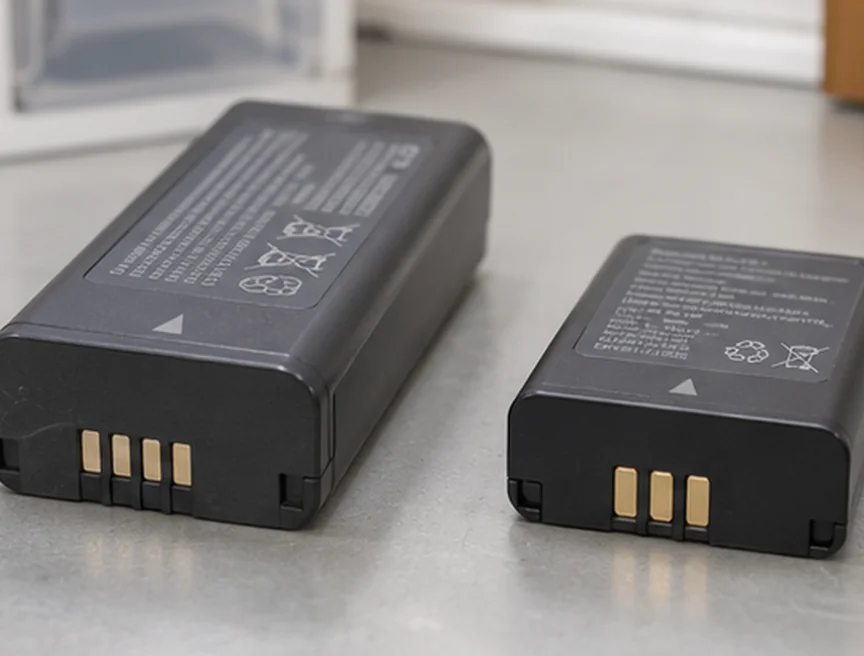
An amp-hour is a way to count electric charge. At a steady one amp, one amp-hour would pass in an hour. A watt-hour counts energy. To get a rough energy rating from amp-hours, you also need to know the battery’s voltage.
Why can two batteries with the same amp-hours store different energy?
A higher-voltage battery can supply more energy for the same amount of charge. A 12-volt battery rated at 10 amp-hours works out to roughly 120 watt-hours using its nominal voltage. A 24-volt battery with the same amp-hour rating has about twice that nominal energy.
Will the device really get the whole number?
The usable energy depends on the battery, its temperature, the load, and where its controls stop discharging. Some of the energy can also be lost in converting the voltage for the device.
For more on current, voltage, and stored electrical energy, see Basics of Electric Utilities 101.