
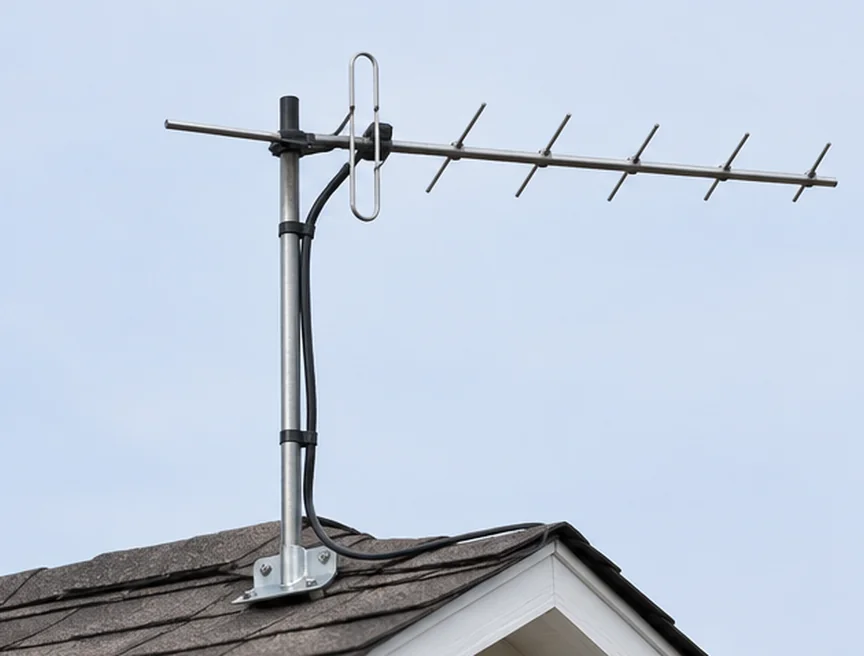
A radio signal has a wavelength, which is the distance from one part of the wave to the next matching part. Lower frequencies have longer wavelengths. An antenna’s size affects how the current in it responds to the wave. That’s why an antenna for one frequency band can look very different from an antenna for another.
Is the antenna as long as the whole wave?
Many common designs use a fraction of a wavelength. A simple vertical antenna may be about a quarter wavelength long for its intended frequency. Its surroundings and the way it’s fed also affect how it works.
What about a tiny antenna inside a radio?
An antenna can be folded or have parts that make it behave electrically longer than it looks. Making it smaller can limit how efficiently it works or how wide a range of frequencies it covers.
For more on frequency and how electrical signals travel, see Basics of Electric Utilities 101.