
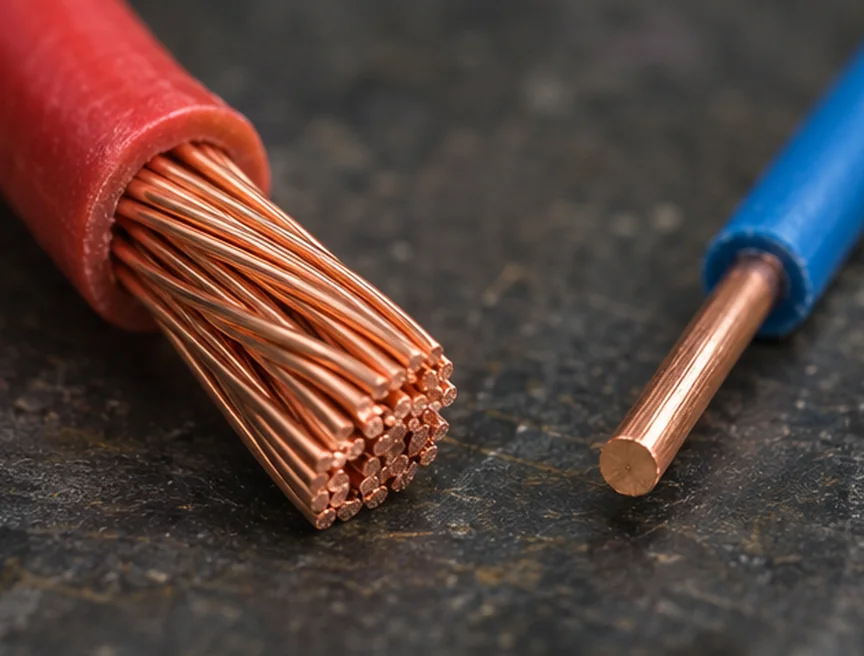
Look at the end of an appliance cord and the copper inside may be a bundle of fine wires. The strands share the current, and they can shift slightly against one another when the cord bends. That makes the cord easier to move around than one with a solid piece of copper of similar size.
Where does solid wire make sense?
Wiring inside a wall can stay in one position for years. A solid conductor is stiff enough to hold its shape while it’s installed. A tool cord gets pulled around and bent repeatedly, so the flexibility of stranded wire matters much more there.
Does stranded always mean it can carry more current?
No. The copper area matters, but so do the insulation, temperature, and way the wire is installed. The strands are a way to get flexibility. The cable still has a current rating based on how it’s designed and used.
For more on the materials that carry current, see Basics of Electric Utilities 101.