
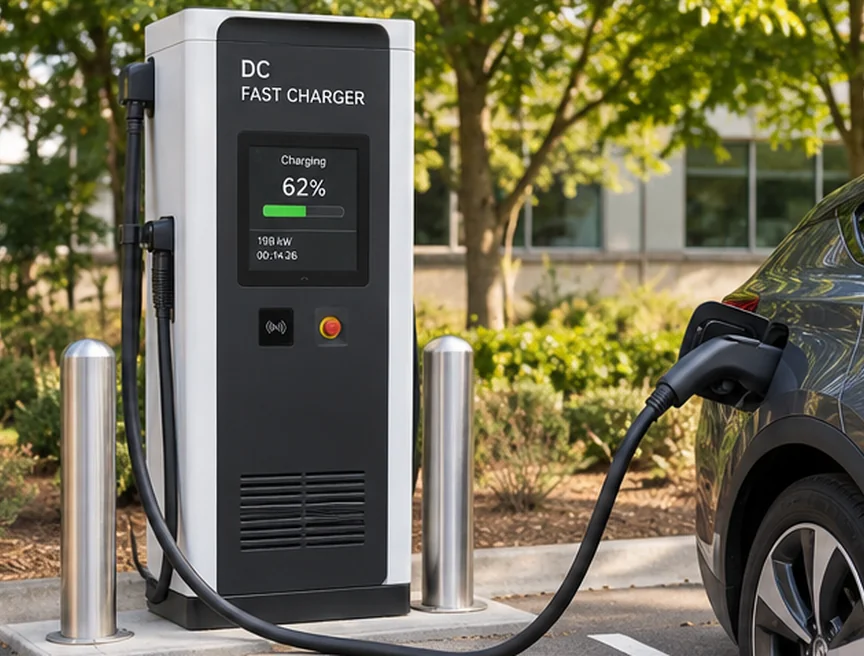
Fast charging can send a lot of current through the cable in a short time. The cable and its contacts have some resistance, which turns part of that energy into heat. A liquid-cooled design sends coolant through the cable assembly to carry that heat away.
Why not just make the copper bigger?
A larger conductor has less resistance. It can also make a cable heavier and stiffer. Cooling is one way to carry more current without making the part a driver handles uncomfortably bulky.
Does every fast charger need it?
The answer depends on the power, voltage, current, and cable design. Delivering the same power at a higher voltage can take less current. The vehicle and charging station still have to agree on what they can both handle.
For more on what sets the limits of an EV charging session, see Electric Vehicle Fundamentals.