
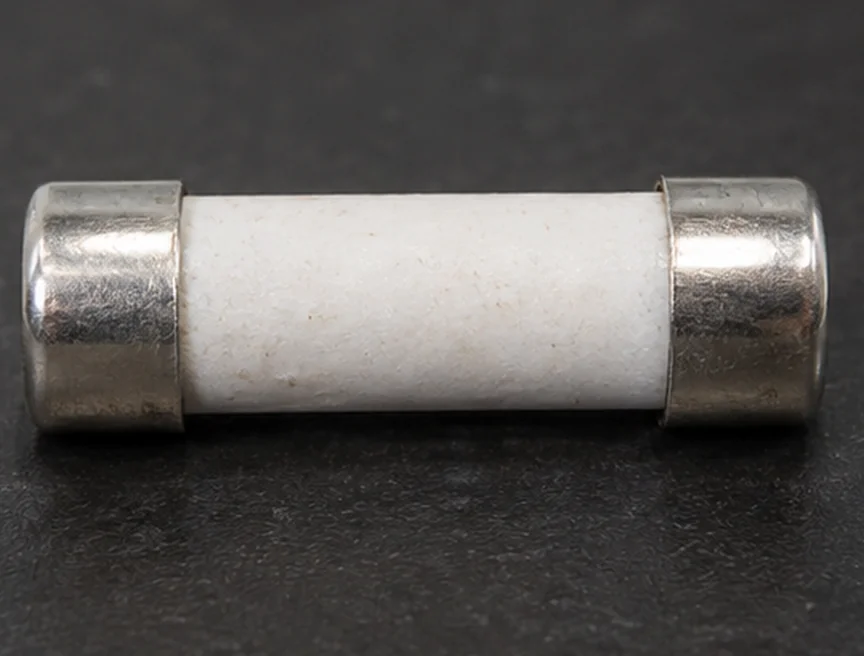
A fuse has a metal link that melts when too much current flows for long enough. Melting opens a gap, but current can still jump across it as an arc. The fuse needs to stop that arc as well as melt the link.
What makes DC different?
Alternating current passes through zero twice per cycle. That gives an AC fuse a regular chance to put out the arc. Direct current has no repeating zero crossing. A DC fuse has to make the arc stop without waiting for the circuit to do that on its own.
Why is there a voltage number on the fuse?
It tells you one limit of what the fuse can interrupt safely. A fuse can have different allowable voltages for AC and DC. The current number by itself doesn’t say which circuits the fuse can protect.
For more on AC, DC, and protection, see Basics of Electric Utilities 101.