
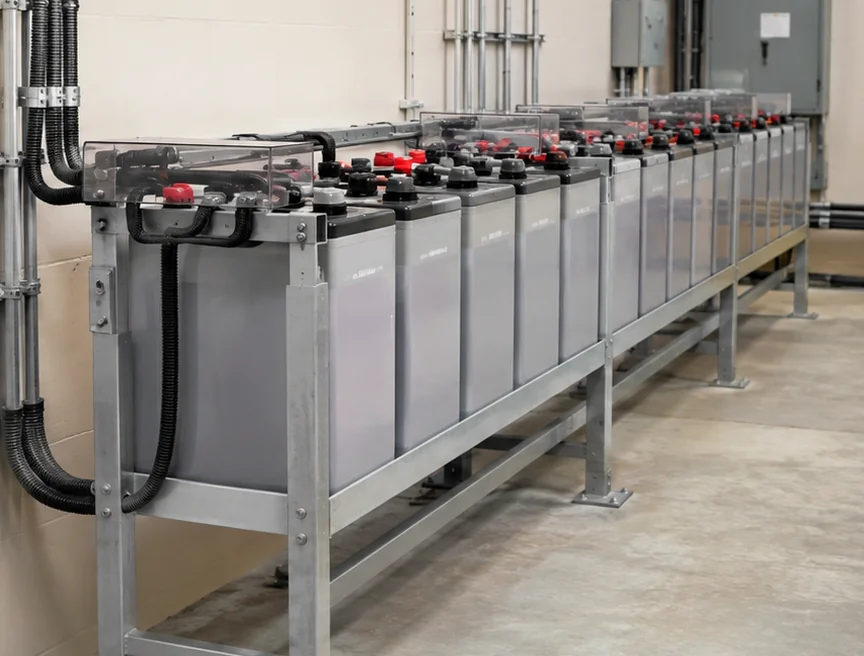
A substation does more than carry power through big wires. It has relays, controls, and ways to tell operators what’s happening. Those devices have to work even when the station’s regular AC supply disappears. A battery bank can supply a separate DC circuit for them.
What would the battery do during a fault?
A protective relay can tell a breaker to open. The breaker’s control circuit still needs power to make that happen. The battery can provide it even if the same event has knocked out the station’s normal supply. It can also support some alarms and communications.
How does the battery stay ready?
A charger normally keeps it charged and helps supply the DC loads. The station battery is sized for the controls it has to run and for how long the utility needs them to stay available. It’s there so the station can still respond when its other source of power is gone.
For more on the equipment that keeps a substation operating, see Substation Systems.