
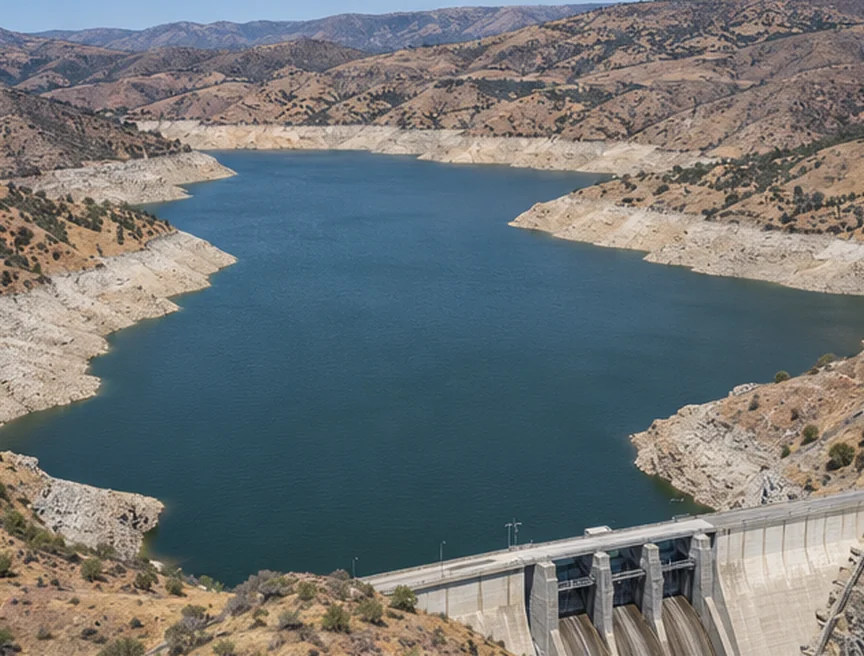
A hydroelectric plant needs water moving through its turbines. If less rain or snow falls, less water may reach the reservoir. The plant may have to run less often or send less water through when it does run.
Does the reservoir height matter too?
Yes. The difference in height across the plant helps determine how much energy each gallon can give up. If the reservoir falls while the water level below the dam stays the same, the plant has less of that height difference to work with.
Why not use the rest of the water to keep making power?
The reservoir may also supply drinking water or irrigation, or have rules about river flow and fish. Operators have to share what’s available among those needs. A drought makes those choices harder.
For more on how water flow and height affect electricity generation, see Basics of Electric Utilities 101.