
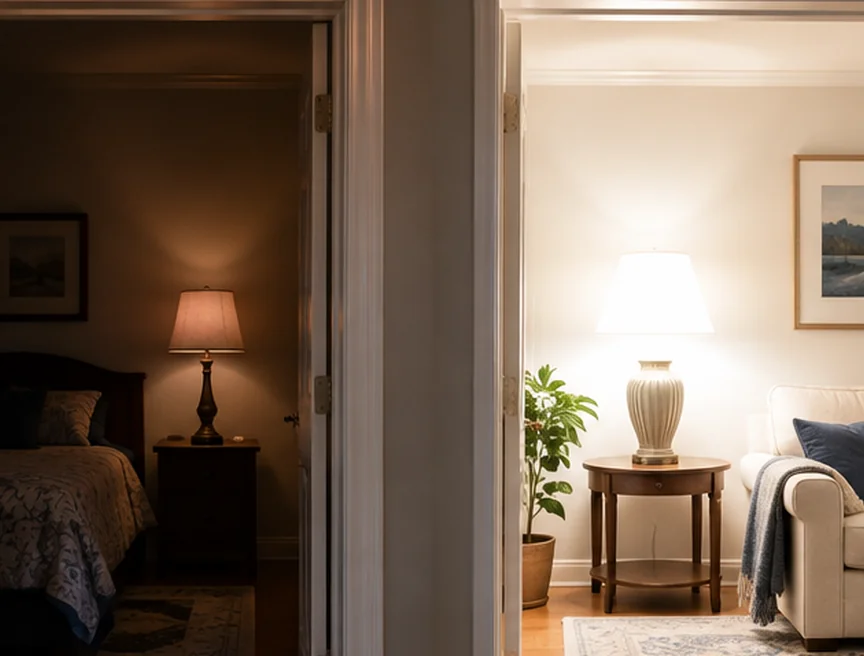
On a typical U.S. service, the neutral gives both sides of the 120-volt supply a common reference point. If that connection opens, equipment on one side can end up in series with equipment on the other. The two sides still share about 240 volts between them, but they may no longer get an equal share.
Why does one lamp get bright and another get dim?
The voltage can shift as appliances turn on and off. One set of lights may get too much voltage while the other gets too little. That’s different from a normal short dip when a motor starts.
What if I see that happening?
Brightening and dimming in different parts of the house at the same time can mean a serious service or wiring problem. Report it promptly to the utility or a qualified electrician. The symptom can help them decide where to look.
For more on how a typical U.S. home gets 120 and 240 volts, see Basics of Electric Utilities 101.