
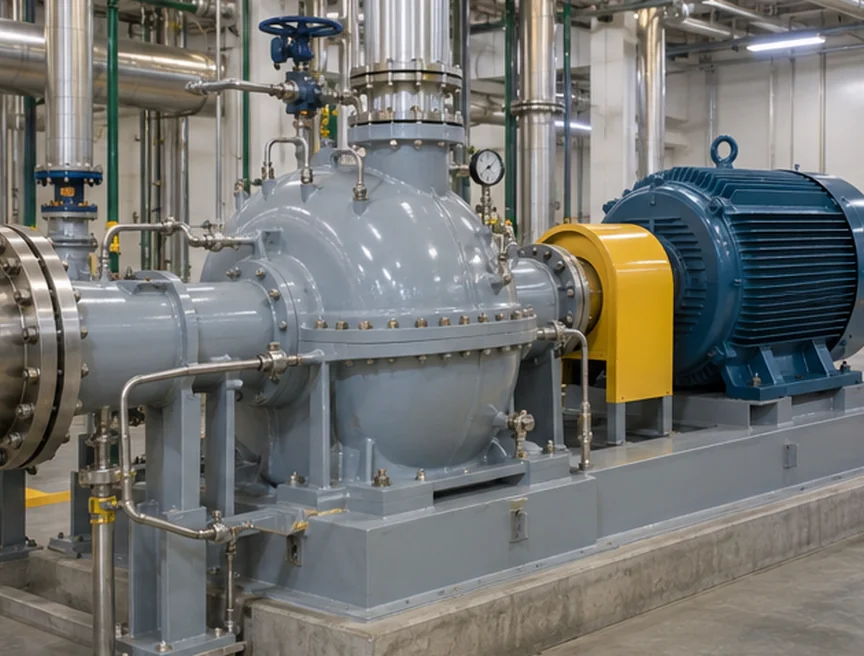
A steam plant can cool its exhaust steam back into water and use it again. The water has to get back into a boiler that may be at very high pressure. A feedwater pump raises the water’s pressure enough to move it into that part of the plant.
Why isn’t it like pumping water out of a basement?
The pump can have a much larger flow and a much larger pressure increase to provide. Both take power. The pressure also has to suit the boiler as the plant operates at different loads.
Does the plant use some of its own output for that?
A feedwater pump can use a large electric motor or get its drive another way, such as from a small steam turbine. Either way, the plant has to supply energy to keep the feedwater moving.
For more on how a steam plant returns water to its boiler, see Electric Power Generation.