
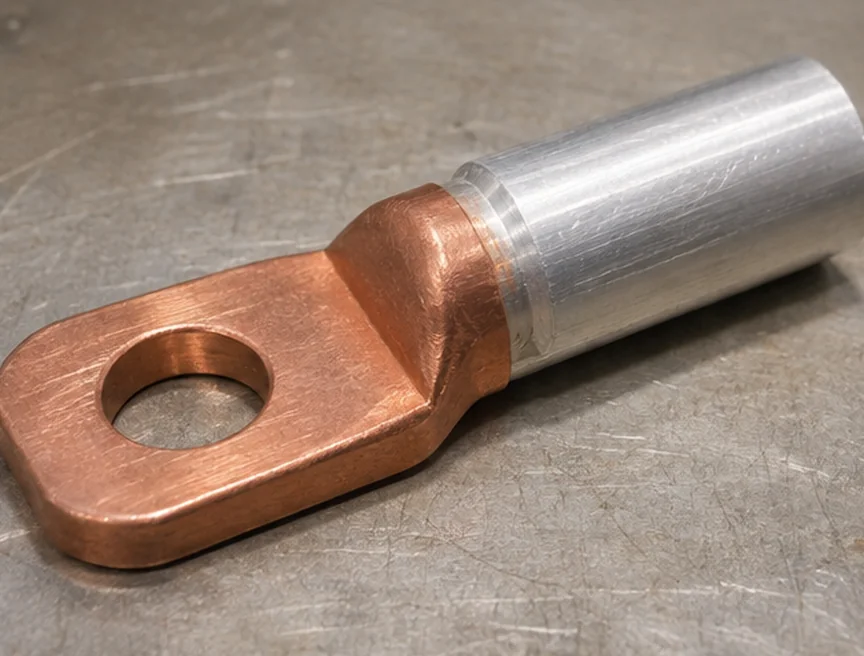
Copper and aluminum both make useful conductors. At a joint they have to stay in good electrical contact through years of load changes, heating, and cooling. Aluminum expands more as it heats. Its surface also forms an oxide that conducts poorly. The connector has to account for those differences.
What if moisture reaches the joint?
Different metals in contact can corrode when moisture provides a path for a chemical reaction. A connector designed for the two metals can use appropriate contact surfaces and protection. Details depend on the wire and where the joint is installed.
Why does the rating matter?
A connector that fits physically may not be designed for both materials. Ratings tell the installer which conductors a connector was evaluated for. A good connection needs to stay sound after many cycles, not only when it’s first made.
For more on the metals used to carry electricity, see Basics of Electric Utilities 101.