
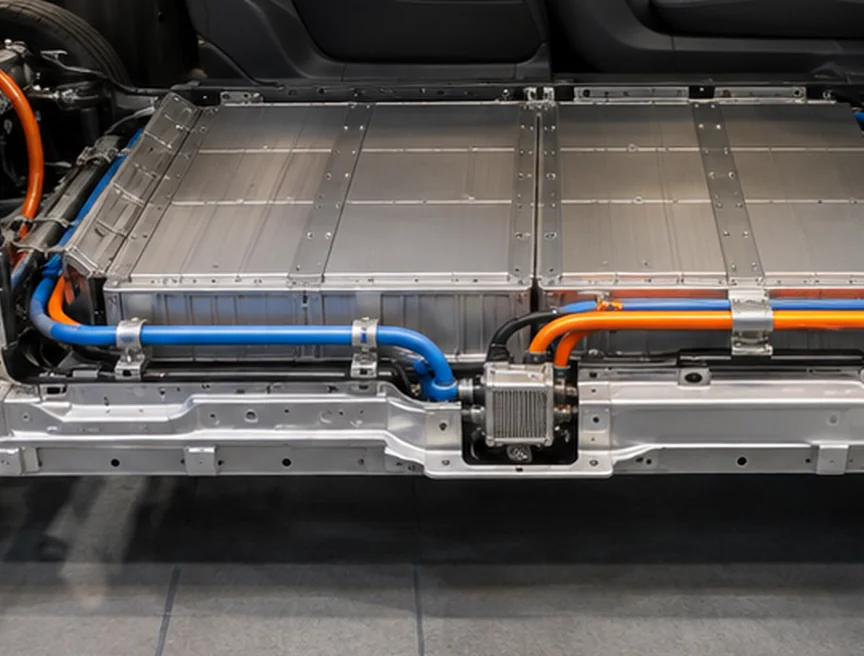
A battery pack makes heat when current flows as you drive or charge. Hard acceleration and fast charging can put a lot of current through the cells. The car has to move that heat out so the battery stays within a temperature range it can work in.
How does the heat get out?
Many cars pump liquid coolant through channels next to the cells. The coolant picks up heat there and takes it somewhere the car can get rid of it. Some designs use air. The idea is to avoid very hot cells and keep temperatures reasonably even through the pack.
Does it ever need heat instead?
A cold battery can have trouble accepting a fast charge. Some cars warm the pack before a fast-charging stop. That’s another part of controlling the temperature. The battery works best when it’s neither too hot nor too cold.
For more on what an electric car’s battery and charging systems do, see Electric Vehicle Fundamentals.