
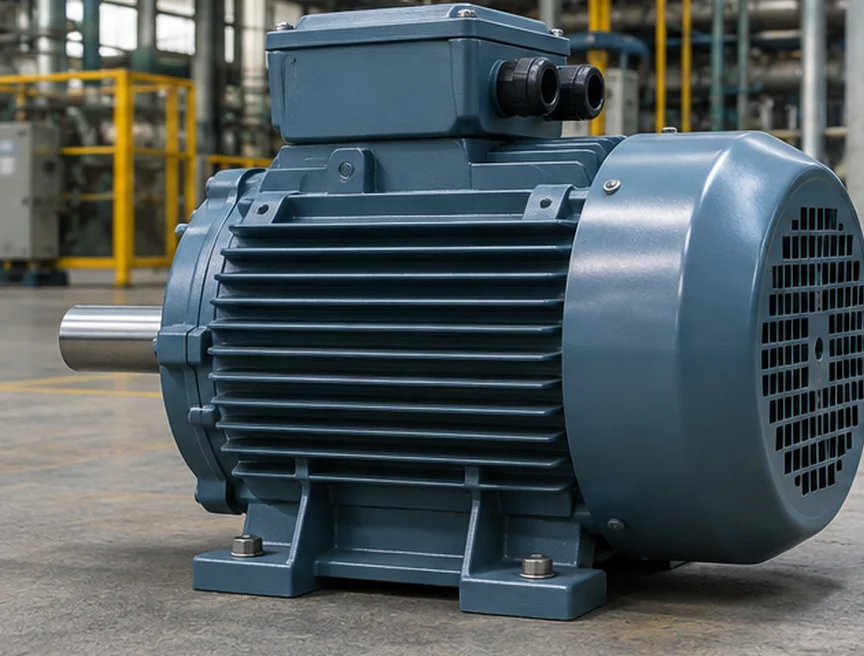
In a typical motor under load, most of the electrical energy goes into turning the shaft. Some turns into heat in the windings, the magnetic parts, and the bearings. Give that heat a way out and the motor can keep running without its internal temperature climbing too high.
What do all those ridges do?
They give the metal housing more surface area. Heat can move from the inside of the motor to the housing and then to the air. On a common enclosed motor, a fan on the shaft blows air along the outside of the fins. The fan moves air outside the housing while the windings stay enclosed.
What happens when the motor runs slowly?
A fan driven by the shaft also slows down. A motor that must turn slowly under a heavy load may use a separate fan so it can still get enough cooling air.
For more on where motors use electrical energy, see Basics of Electric Utilities 101.