
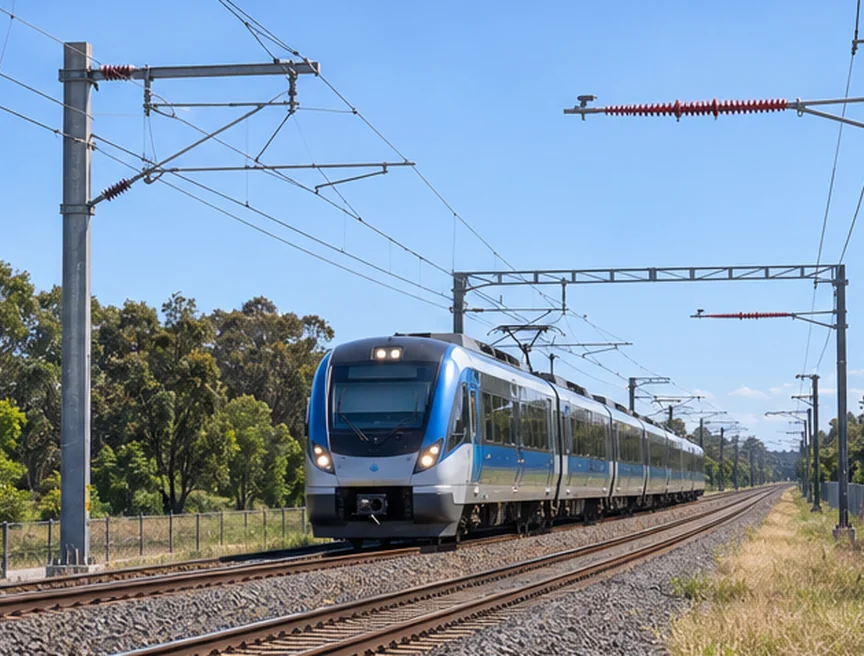
An electrified railway can have adjoining stretches of overhead wire fed from different supplies. Between them there can be a short section with no normal power. It lets the train pass from one supply to the next without joining the two through its current collector.
Does the train stop while it passes through?
It can keep rolling on its momentum for a short distance. On many trains the electrical equipment opens its main connection while crossing, so the train doesn’t try to draw traction power from the gap. The rules and controls for doing that depend on the railway.
Why keep the supplies separate?
They may come from different phases or different sections of the electrical system. Joining them directly could cause a large current. The insulated section lets the rails and the train continue on while the overhead electrical supplies stay separated.
For more on how AC electrical supplies are separated and connected, see Basics of Electric Utilities 101.