
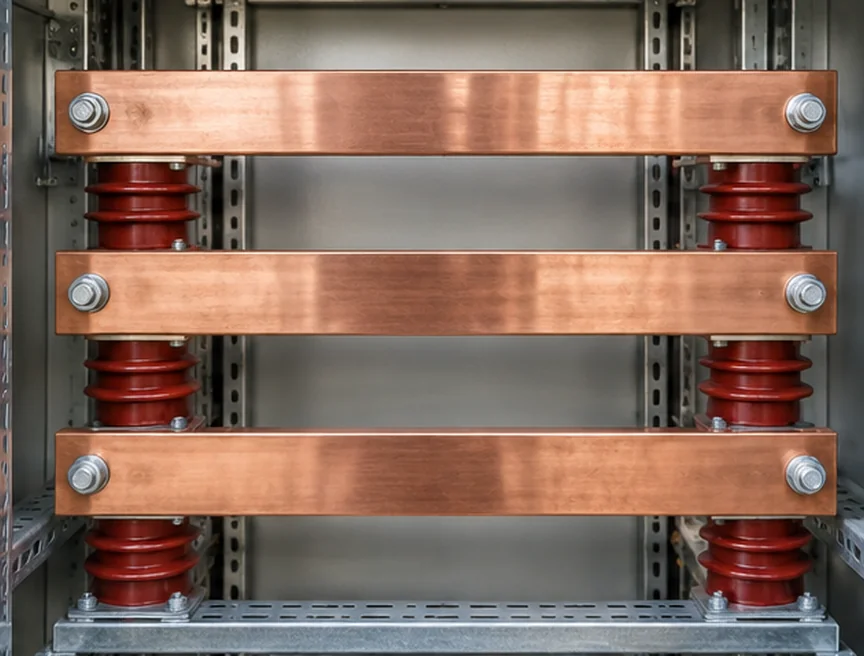
That thick strip of metal is often a busbar. Think of it as one common conductor with several places to connect. In an electrical panel, it can bring power to a row of circuit breakers. In larger equipment, busbars can connect generators, transformers, or groups of circuits.
Why use a flat bar?
A flat face makes a good place to bolt on another bar or connector. It also gives the bar room to spread heat over its surface. The bar can be rigidly supported, which matters because very high currents during a fault can produce strong forces between conductors.
Are they all copper?
Copper is common, and aluminum is used too. Both conduct electricity well. An aluminum bar may need a larger cross section than a copper bar for similar current, depending on the design and how the equipment gets rid of heat.
For more on how electrical equipment carries and distributes current, see Basics of Electric Utilities 101.