
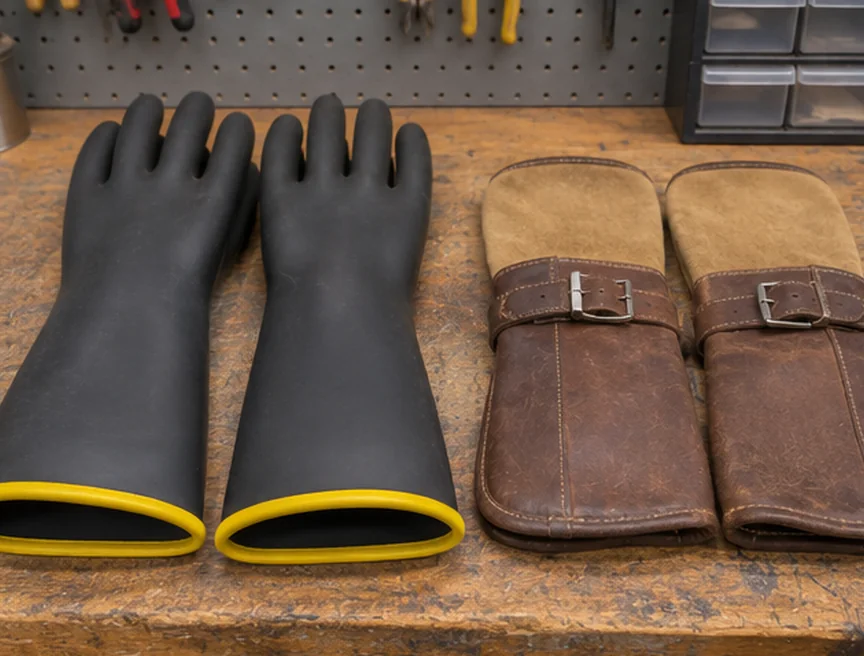
An electrical insulating glove is made to resist current through the material. The amount of voltage that the material can withstand depends on things like its thickness and condition. A voltage class identifies the range the glove was designed and tested to cover under its applicable standard.
Why do you sometimes see a leather glove on top?
Leather can protect the rubber from cuts and wear. The rubber does the electrical insulating. The two pieces have different jobs even though they can be worn together.
Does the class label tell a crew the whole story?
The glove has to be in suitable condition. Inspection and electrical retesting help check that it still provides the protection it was designed for. Crews also match their equipment to the work and its electrical conditions.
For more on voltage and the role of insulating materials, see Basics of Electric Utilities 101.